
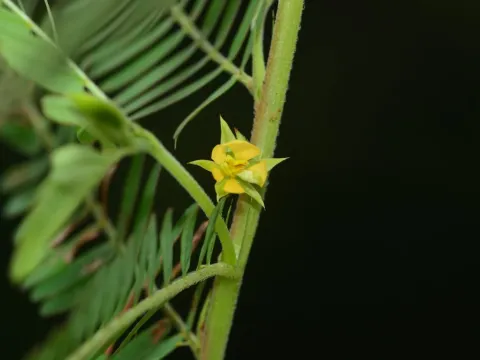
Chamaecrista pumila
Chamaecrista pumila
Chamaecrista pumila is a legume species that plays a significant role in nitrogen fixation, making it a valuable candidate for sustainable soil management practices.
What the section contains
Chamaecrista pumila
Sowing should ideally take place at the beginning of the rainy season to ensure that the seeds receive the moisture necessary for successful germination and early establishment.
The seeds are relatively small and should be sown at a shallow depth of approximately 1 to 2 centimeters to maximize emergence rates across the field.
Optimal spacing should provide enough room for the plants to develop lateral branches, which contributes to the formation of an effective ground cover.
Once established, the crop grows vigorously and is capable of outcompeting many common weeds, reducing the need for intensive mechanical weeding operations.
This crop thrives in a variety of soil types, ranging from sandy to clay soils, as long as they are well-drained and not subject to prolonged waterlogging.
It is highly photophilous and requires full sun exposure to reach its maximum potential for biomass production and seed yield.
Chamaecrista pumila is well-adapted to warm climates and demonstrates excellent resilience to short-term dry spells, which is a key trait for tropical agriculture.
Although it grows well in nutrient-poor soils, the application of phosphorus-based fertilizers can significantly boost root development and nitrogen fixation efficacy.
The plant performs best in environments where temperatures remain consistently high throughout the growing season, avoiding frost-prone latitudes.
Root rot is a major threat during periods of excessive rainfall or poor soil drainage, which can severely compromise the plant's symbiotic relationship with rhizobia.
Leaf-eating insects, including various species of beetles and caterpillars, can cause significant damage to the canopy if not managed during peak infestations.
Fungal leaf spot diseases can develop in humid conditions, necessitating the use of disease-resistant varieties and proper field sanitation techniques.
Soil-borne nematodes can hinder root growth, emphasizing the importance of diverse crop rotation systems that prevent the buildup of pathogen populations.
To mitigate the risk of pest and disease outbreaks, farmers should avoid monoculture practices and encourage natural biological controls within the field ecosystem.
The harvest period depends on whether the crop is being utilized for biomass incorporation (green manure) or for the production of seeds for future planting.
For green manure purposes, the plants should be mown or incorporated into the soil just before the flowering stage to maximize nitrogen content.
When harvesting for seeds, the pods should be collected once they start turning brown to prevent excessive shattering and field loss of the crop.
Mechanical harvesting equipment should be calibrated to handle the delicate nature of the pods, ensuring that seed quality remains high during the cleaning process.
Proper drying of the harvested seed material is essential to prevent mold growth and ensure longevity for storage before the next sowing season begins.