
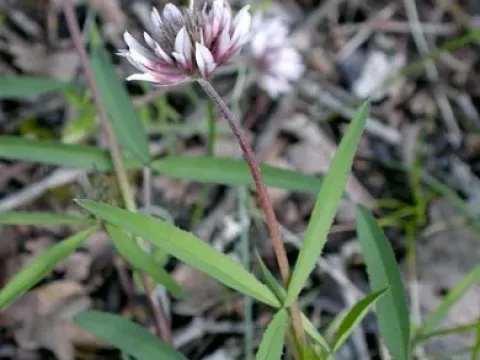
Longstalk clover
Trifolium longipes
Longstalk clover (Trifolium longipes) is a resilient perennial member of the Fabaceae family, native to the mountainous regions of Western North America. It is a highly valued species for its adaptability to subalpine environments.
What the section contains
Longstalk clover
Botanically, the plant is distinguished by its distinctive long peduncles and creeping rhizomes, which allow it to spread effectively across varying terrain. The foliage is characteristically trifoliate, providing dense ground cover.
This species thrives in moist meadows and along stream banks, demonstrating a high tolerance for spring flooding. It is ideally suited for climates with cold winters and cool to moderate growing seasons, avoiding extremes of heat.
Regarding soil requirements, it prefers moist, fertile loams with a slightly acidic to neutral pH. Due to its nitrogen-fixing capabilities, it contributes significantly to soil fertility improvement in pasture systems.
In agricultural practice, Longstalk clover is primarily utilized as high-protein forage. It is favored for grazing because it remains palatable throughout the growing season and recovers well after moderate browsing or cutting.
Like many clover species, it is susceptible to fungal pathogens such as rust and powdery mildew, especially in environments with high humidity or poor air circulation.
Insect pests, including weevils and aphids, can cause significant damage to the plant's leaf area and reproductive structures, potentially leading to yield reductions.
Root rot diseases present a persistent challenge in soils prone to waterlogging or compaction, often resulting in patchy and uneven stand development.
Leaf spot diseases are also common in regions with prolonged wet weather, which can decrease the overall nutritional value of the harvested biomass.
Effective management strategies include ensuring adequate soil drainage, avoiding overgrazing during sensitive growth stages, and monitoring for early signs of pest infestation.