
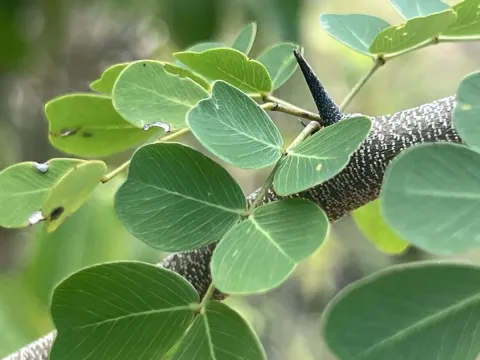
Logwood
Haematoxylum
Logwood, scientifically known as Haematoxylum campechianum, is a significant member of the Fabaceae family. It is a slow-growing evergreen tree native to Central America and the Caribbean.
What the section contains

Logwood
The tree thrives in tropical climates where the temperature remains consistently warm. It requires a frost-free environment to maintain steady annual growth rates.
Ideal soil conditions for logwood involve well-draining loams that can retain moisture without becoming waterlogged, as the roots are susceptible to decay.
Full sun exposure is essential for the tree to produce its characteristic heartwood, which contains the valuable pigments used in various industrial sectors.
Historically and economically, logwood is primarily cultivated for its timber, which is a source of hematoxylin, a widely used dye in histology and textile manufacturing.
In various cultivation regions, logwood trees are occasionally targeted by scale insects that sap the vitality of young saplings and branches.
Root rot pathogens represent the most significant threat to plant health, typically occurring when the soil structure does not allow for efficient drainage.
Leaf-eating caterpillars and certain beetles can cause defoliation, particularly during the early stages of establishment in young plantation plots.
Environmental stress, such as extreme drought or water stagnation, predisposes the trees to secondary infections by fungal pathogens.
Integrated pest management strategies, focusing on regular monitoring and sanitation, are recommended to maintain the long-term health of logwood stands.