
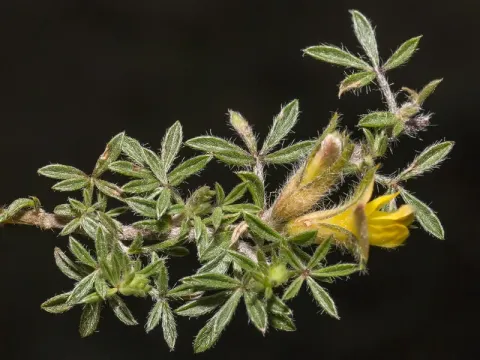
Lotononis lupinifolia
Lotononis lupinifolia
Lotononis lupinifolia is a perennial herbaceous plant belonging to the Fabaceae family. Originating from Southern Africa, it is well-adapted to arid and semi-arid environments where it thrives on sandy or rocky soils, showcasing remarkable resilience in challenging climatic conditions.
What the section contains
Lotononis lupinifolia
Botanically, the plant is characterized by its trifoliate leaves and its ability to establish symbiotic relationships with nitrogen-fixing bacteria. This biological feature significantly contributes to soil nitrogen enrichment, making the plant a valuable tool for sustainable land management and soil fertility improvement.
In terms of soil requirements, the species performs best in well-drained, nutrient-poor substrates. It possesses a deep taproot system that allows it to access groundwater, ensuring its survival during intense heat and extended dry seasons when most other pasture grasses fail to grow.
The plant demonstrates high adaptability to temperature fluctuations and thrives in full sun. This environmental flexibility makes Lotononis lupinifolia an excellent candidate for revegetation projects, particularly in degraded rangelands where water availability is a major limiting factor for agriculture.
Economically, this legume is primarily cultivated as a high-quality forage crop for livestock. Its nutritional profile includes significant protein content, which is essential for maintaining healthy herds during periods when seasonal forage is scarce, thus supporting more sustainable and productive animal husbandry.
The health of Lotononis lupinifolia stands can be threatened by various fungal pathogens, specifically those that flourish under high soil moisture or poor drainage conditions. Root rot represents the most significant threat, often leading to rapid population decline if the fields are not properly managed.
Insect pests such as aphids are frequent intruders that target young foliage and stems. By feeding on the plant sap, these insects can weaken the plant's overall vigor and reduce the yield of biomass, necessitating integrated pest management strategies to protect the crop during its peak growing season.
Weevils pose a threat by attacking both the vegetative and reproductive parts of the plant. Their presence can severely impact seed production, which is a major concern for farmers who rely on self-seeding cycles to maintain the density of their pastures over several consecutive years.
Effective management against these threats involves careful site selection and the implementation of proper crop rotation practices. Avoiding excessive irrigation is crucial, as it creates an environment conducive to the spread of soil-borne diseases that are difficult to manage once they become established.
Monitoring programs are recommended to identify pest and disease outbreaks at an early stage. When necessary, the application of biological controls and selective treatments can mitigate risks, ensuring that the crop remains productive and continues to serve its vital function as a reliable forage source.