
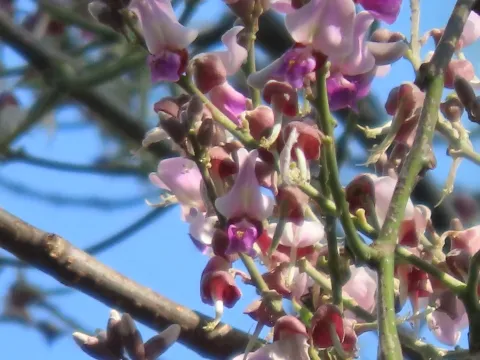
Lonchocarpus
Lonchocarpus
Lonchocarpus is a genus of tropical trees and shrubs belonging to the Fabaceae family. These plants are native to the regions of Central and South America, where they have evolved to thrive in tropical climates characterized by distinct wet seasons.
What the section contains
 Lonchocarpus capassa
Lonchocarpus capassa
Lonchocarpus capassa
 Lonchocarpus castilloi
Lonchocarpus castilloi
Lonchocarpus castilloi
 Lonchocarpus longistylus
Lonchocarpus longistylus
Lonchocarpus longistylus
 Lonchocarpus muehlbergianus
Lonchocarpus nicou
Lonchocarpus nicou
Lonchocarpus muehlbergianus
Lonchocarpus muehlbergianus
Lonchocarpus nicou
Lonchocarpus nicou
 Lonchocarpus nitidus
Lonchocarpus nitidus
Lonchocarpus nitidus
 Lonchocarpus pentaphyllus
Lonchocarpus pentaphyllus
Lonchocarpus pentaphyllus
 Lonchocarpus punctatus
Lonchocarpus punctatus
Lonchocarpus punctatus
 Lonchocarpus rugosus
Lonchocarpus salvadoriensis
Lonchocarpus salvadoriensis
Lonchocarpus rugosus
Lonchocarpus rugosus
Lonchocarpus salvadoriensis
Lonchocarpus salvadoriensis
 Lonchocarpus urucu
Lonchocarpus utilis
Lonchocarpus utilis
Lonchocarpus urucu
Lonchocarpus urucu
Lonchocarpus utilis
Lonchocarpus utilis
 Silky Lonchocarpus
Lonchocarpus sericeus
Silky Lonchocarpus
Lonchocarpus sericeus
Lonchocarpus
Successful cultivation of this crop requires consistently high temperatures throughout the growing season. The plant is extremely sensitive to frost, which limits its commercial production to tropical and subtropical climate zones.
The culture prefers well-drained, fertile soils with a neutral to slightly acidic pH level. Adequate moisture supply is critical for growth; however, waterlogging in the root zone must be avoided to prevent fungal infections and seedling mortality.
From an agrotechnical perspective, Lonchocarpus is valued for its nitrogen-fixing capabilities through symbiosis with nodule bacteria. This trait allows the plant to thrive in less fertile soils, provided that root aeration is maintained.
Propagation is typically achieved through seeds or vegetative cuttings. In the early stages of development, young seedlings require protection from intense direct sunlight to ensure high survival rates during the establishment phase.
The primary economic value of Lonchocarpus lies in the production of rotenone, a natural insecticide found concentrated in the plant roots. Harvesting involves excavating the root system, which defines the crop as a periodic harvest species.
The harvesting process takes place once the plant reaches physiological maturity, typically 2 to 3 years after planting. This timeframe is essential to ensure that the concentration of active insecticidal compounds in the roots reaches commercial levels.
The harvesting procedure involves carefully uprooting the plants, cleaning the roots of soil, and subjecting them to controlled drying. Precise temperature management during drying is vital to prevent the thermal degradation of the rotenone compounds.
Once dried, the raw material is processed into a powder and undergoes solvent extraction to produce concentrated natural pesticides used in sustainable organic farming to combat various agricultural pests.
Beyond its insecticidal properties, the wood of several Lonchocarpus species is highly prized for its durability and resistance to rot, making it a valuable material in construction and the furniture industry.