
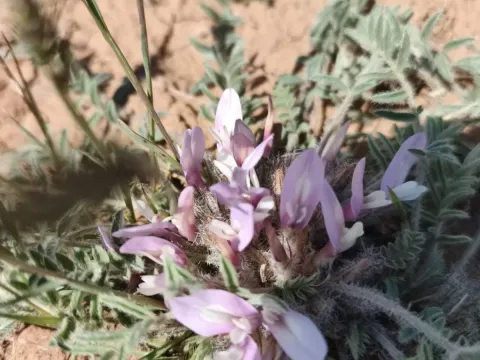
Long-leaved milkvetch
Astragalus dolichophyllus
Long-leaved milkvetch (Astragalus dolichophyllus) is a perennial herbaceous plant belonging to the Fabaceae family. Sowing is typically performed in early spring as soon as the soil warms to 8–10 degrees Celsius, allowing the seeds to germinate before the peak of summer heat.
What the section contains
Long-leaved milkvetch
A row-planting method is recommended to provide each plant with sufficient space and nutrients. This approach encourages the development of a robust taproot, which is essential for the longevity and drought resistance of this perennial forage crop.
Seed depth should be maintained between 2 and 4 centimeters, depending on the soil texture. Compacting the soil after sowing using a roller is a crucial step to ensure proper soil-to-seed contact and increase moisture availability for germinating seeds.
Seeding rates range from 10 to 15 kilograms per hectare. Because seeds often have a hard coat, scarification prior to planting is highly recommended to increase the germination rate and ensure a more uniform stand density across the field.
Early development of the crop requires careful weed control. As the plants establish themselves, they become quite competitive, but in the first few months, keeping the field free of invasive weeds is vital for the survival and vigor of the young milkvetch seedlings.
This crop is well-adapted to various soil types, including fertile loams and semi-arid chernozems. It requires well-drained soil, as stagnant water can damage the root system and reduce the plant's overall productivity and lifespan.
The long-leaved milkvetch is a sun-loving plant that thrives in open, sunny environments. It exhibits significant drought tolerance, making it an excellent candidate for cultivation in regions with limited rainfall where other forage crops might fail.
As a legume, it forms a symbiotic relationship with nitrogen-fixing bacteria. To optimize this process, the soil should ideally have a neutral or slightly alkaline pH. If the soil is too acidic, liming will significantly improve the biological nitrogen fixation and biomass yield.
The plant is highly resilient to temperature fluctuations, showing high winter hardiness. Its ability to survive harsh winters and return in the spring makes it a reliable asset for agricultural systems in temperate and continental climates.
Proper aeration is essential for healthy root development. In denser soil environments, periodic cultivation or inter-row hoeing is recommended to break up the surface crust, improve gas exchange, and encourage vigorous growth throughout the vegetative period.
The primary use of Astragalus dolichophyllus is as high-quality forage for livestock. The green biomass is rich in proteins, essential vitamins, and minerals, providing a nutritious feed source that supports healthy weight gain in cattle and sheep.
Yield capacity is influenced by soil fertility and management practices. Under optimal conditions, the crop can provide multiple cuts throughout the growing season, contributing to a reliable and steady supply of fodder for animal feeding operations.
Beyond forage, the crop serves as an effective soil stabilizer. Its deep root system prevents erosion on hillsides and degraded lands, helping to restore the soil structure and increase its water-holding capacity for future agricultural use.
By fixing atmospheric nitrogen into the soil, the plant acts as a natural fertilizer. Incorporating long-leaved milkvetch into a crop rotation cycle significantly improves the overall fertility of the field, reducing the need for synthetic nitrogen fertilizers for subsequent crops.
Seed yield is dependent on the presence of pollinating insects, as the plant relies on cross-pollination. In well-managed fields, commercial seed production can be a profitable secondary output for farmers specializing in perennial legume crops.
Common diseases affecting this crop include various types of leaf spot and powdery mildew. These are usually prevalent in humid or crowded conditions, making proper plant spacing and airflow essential components of an effective disease management strategy.
Weevils are among the primary pests that target the reproductive parts of the plant, potentially causing significant losses in seed production. Monitoring the fields during the flowering phase is necessary to identify and treat infestations before they impact yield.
Integrated pest management (IPM) is the best approach to control threats while maintaining the environmental sustainability of the crop. This involves promoting beneficial insect populations and using natural pest control methods to minimize reliance on chemicals.
Weed management is mainly critical during the establishment year. Once the milkvetch has fully matured and developed its canopy, it is generally very effective at outcompeting most annual weeds, which helps to maintain clean and productive fields.
Proper harvest and storage techniques also prevent post-harvest threats like mold and fungal growth. Keeping seeds and hay in dry, well-ventilated conditions is vital to ensure long-term quality and the viability of seeds for the next planting season.
The ideal time to harvest for forage is during the budding stage or at the start of flowering. Harvesting at this point ensures the highest nutritional value, as the plant has not yet redirected all its energy toward seed production.
When producing hay, rapid drying is key to preserving the nutrient-dense leaves. Using specialized equipment like tedders helps to dry the cut biomass evenly without excessive mechanical loss of the foliage, which is where the bulk of the protein resides.
Seed harvesting should be timed after the pods have turned brown and reached their maturity stage. Direct or multi-stage harvesting can be used, provided that the timing is precise to prevent pod shattering and potential seed loss in the field.
Maintaining a cutting height of at least 8 centimeters is important to ensure the plant's survival and promote regrowth. This leaves the vegetative buds intact, which is critical for the production of subsequent cuts during the summer season.
Post-harvest management should include light fertilization with phosphorus and potassium. This boosts the plant's energy reserves in the roots, ensuring the crop remains healthy, productive, and well-prepared for the coming winter dormancy period.