
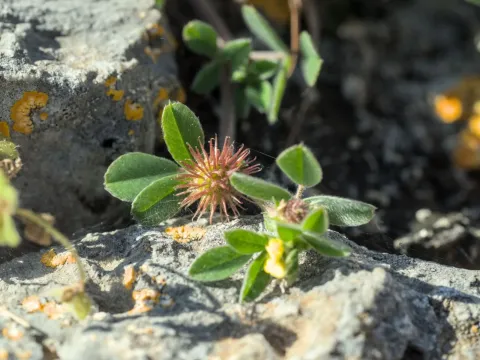
Little burr clover
Medicago minima
Little burr clover (Medicago minima) is an annual legume species that is highly adapted to arid and semi-arid environments. Sowing typically takes place in early spring, once the danger of frost has passed and soil temperatures consistently reach 8-10 degrees Celsius.
What the section contains
Little burr clover
The seeds have a hard seed coat, making scarification a recommended practice to improve germination rates significantly. Sowing is best performed using a grain drill or broadcast seeder followed by light harrowing to cover seeds with 1-2 centimeters of soil.
Autumn sowing is also feasible in regions with mild winters, allowing the plant to establish a root system before the onset of extreme heat. This provides the crop with a competitive advantage in early spring growth.
The recommended seeding rate is approximately 5-8 kilograms per hectare for pure stands. However, when integrated into pasture mixes, this rate is reduced to accommodate the presence of other grass species.
Soil compaction following the sowing process is essential to establish good capillary contact between the soil and seeds, ensuring uniform emergence across the field even in dry spring conditions.
This crop thrives in well-drained, sandy, or loamy soils and is particularly known for its ability to grow on shallow or rocky terrains where other crops might fail. It possesses a high tolerance for alkaline and saline soil conditions.
As a legume, it is nitrogen-fixing and does not require synthetic nitrogen fertilizers, making it an economically and ecologically sound choice for low-input farming systems. It is highly drought-tolerant, utilizing a deep root system to access water.
Little burr clover requires full sun to reach its full development potential and does not compete well in shaded areas. Optimal soil pH ranges between 6.5 and 8.5, which aligns with its preference for calciferous soil environments.
Climate adaptability is one of its primary strengths, as it survives extreme summer heat without succumbing to desiccation. It is well-suited for temperate and Mediterranean-like climate zones with distinct dry seasons.
Proper pasture management is vital; while the plant is resilient, it requires strategic grazing intervals to ensure it sets enough seed to replenish the soil seed bank for the following year.
The primary use of little burr clover is as a high-quality forage source for sheep, goats, and cattle on rangelands. Its nutritional profile, high in protein and minerals, significantly boosts the feeding value of natural pastures.
Productivity is variable, heavily influenced by seasonal rainfall and soil quality. In well-managed systems, it can contribute significantly to the total biomass production, especially during the spring growth flush.
Its self-reseeding ability makes it a permanent component of sustainable pastoral systems. By managing grazing pressure, farmers can ensure the longevity of the clover stand without the need for periodic re-sowing.
The foliage remains palatable for livestock throughout the majority of its life cycle. Even when mature, the dry matter provides adequate nutrition for grazing animals in summer-dry environments.
Beyond forage, the plant is valued for its role in soil conservation and as a component of ecological restoration projects in degraded dryland areas, helping to stabilize the soil surface.
Fungal diseases, including rust and powdery mildew, may occur during seasons with higher than average humidity. These diseases are generally minor concerns in the dry regions where the clover typically thrives.
Common insect pests include weevils, which can damage leaves and reproductive parts, potentially impacting seed yield. Monitoring during the early vegetative stage is important to prevent economic loss.
Root rots can become problematic in areas with poor drainage or stagnant water. Ensuring proper soil aeration through correct site selection is the best preventative measure against these soil-borne pathogens.
Weed competition during the seedling stage can inhibit development. Mechanical control through light harrowing or selective mowing can help the clover establish its presence before other weeds take over.
Overgrazing is the most significant threat to the long-term sustainability of the stand. Excessive grazing prevents the plant from completing its life cycle and producing sufficient seed, which leads to thinning populations over time.