
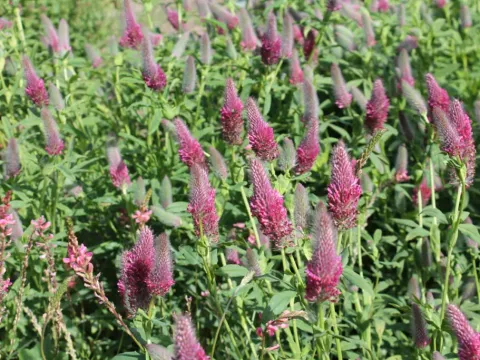
Trifolium erubescens
Trifolium erubescens
The sowing period for Trifolium erubescens typically occurs in early spring, once soil temperatures are sufficient to support germination. Providing enough moisture during this phase is essential for establishing a robust root system before the onset of summer heat.
What the section contains
Trifolium erubescens
In regions with milder climates, late autumn sowing can be a viable strategy to take advantage of early spring moisture. Seeds should be placed at a shallow depth to ensure they emerge promptly without exhausting their nutrient reserves.
The optimal seeding rate varies depending on the specific soil conditions and the intended use of the field, generally ranging between 12 and 16 kilograms per hectare. High-quality seed lots with certified germination rates are recommended for consistent density.
Drill seeding or narrow-row spacing is often preferred to promote even development and reduce competition with encroaching weeds. Consistent row management helps in maximizing the spatial efficiency of the crop across the field.
Post-sowing rolling is a crucial mechanical practice to ensure good soil-to-seed contact. By compacting the surface layer, you encourage capillary water rise, which significantly improves the likelihood of successful seedling establishment in drier conditions.
Belonging to the Fabaceae family, this species thrives in well-structured soils that offer good drainage. It is capable of nitrogen fixation, which reduces the need for supplemental nitrogen fertilizers and improves overall soil organic matter.
The plant performs best in neutral to slightly acidic soil conditions with adequate levels of phosphorus and potassium. Soil testing is recommended before planting to adjust nutrient levels and ensure the best start for the clover crop.
Light exposure is vital for the health and development of Trifolium erubescens, as it is a sun-loving plant that produces more biomass under direct sunlight. Fields should be situated in open areas to avoid shading from nearby structures or tree lines.
The species displays a moderate level of cold tolerance, allowing it to withstand temperate winters effectively. However, it is sensitive to waterlogged conditions, which can lead to root rot during the dormant season if drainage is not managed.
Maintenance involves routine monitoring of soil nutrient levels and weed density during the initial establishment phase. As the clover develops, its natural vigor often suppresses weed growth, creating a productive and uniform sward.
Fungal diseases like powdery mildew and various leaf spot pathogens represent significant risks, especially during periods of high humidity and warmth. Practicing proper crop rotation helps minimize the buildup of these pathogens in the soil.
Insects, such as clover root curculio and various weevil species, can damage both root and leaf tissues, leading to reduced vitality and biomass loss. Integrated pest management strategies are often necessary to maintain population levels below economic thresholds.
Root-knot nematodes can also be a hidden threat, leading to stunted plants and weakened overall stand density. Careful selection of fields and avoiding continuous planting of the same legume species help in managing nematode populations.
Bacterial wilt can occasionally occur in susceptible environments, requiring the use of resistant plant varieties as a primary line of defense. Prompt removal and destruction of infected material can help prevent further spread throughout the field.
Effective management includes regular scouting of the field to detect potential outbreaks early. Using biological controls and selective insecticides only when necessary maintains the ecological balance and preserves the longevity of the crop.