
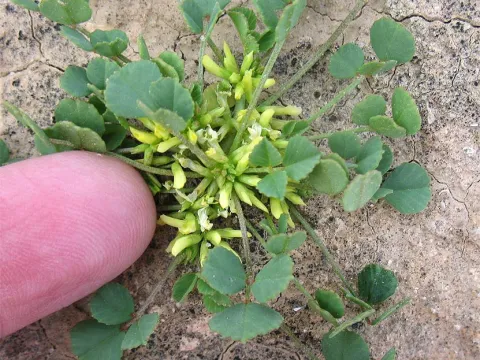
Trigonella astroites
Trigonella astroites
Trigonella astroites is an annual herbaceous plant belonging to the Fabaceae family, adapted to survive in various temperate and arid climates.
What the section contains
Trigonella astroites
The sowing process begins in early spring when soil temperatures reach stable levels, typically around 10 to 12 degrees Celsius, to ensure germination.
Seeds are sown in rows with a standard spacing that allows for adequate airflow and weed control during the initial growth phases.
The optimal seeding depth is approximately 2 to 3 centimeters, which ensures sufficient moisture availability for the developing seed coat.
Early sowing is recommended to allow the plants to establish a deep root system before the onset of potential summer drought periods.
The plant thrives in well-drained, loose soils that provide adequate aeration and prevent the waterlogging of the sensitive root zones.
It prefers sunny, open environments, showing excellent tolerance to high light intensity and moderate temperature fluctuations during the growing season.
Soil pH should ideally be neutral or slightly alkaline, as acidic soils may inhibit the nitrogen-fixing processes characteristic of legumes.
Regular weeding is essential during the early stages of development, as the plant does not tolerate high competition from fast-growing weeds.
Proper mineral balance in the soil, particularly phosphorus and potassium, significantly improves the overall growth rate and plant vigor.
The crop provides a consistent yield of green biomass, which is valuable for its nutritional profile and use as animal feed or green manure.
Seed yield varies depending on the specific agro-climatic zone and the efficiency of the crop management techniques employed by the farmer.
Enhanced yield is often achieved through optimal timing of nutrient application and careful water management during the flowering stage.
Research indicates that the crop's ability to fix nitrogen can improve soil fertility for subsequent crops in the agricultural rotation cycle.
Consistent output is ensured by utilizing certified seeds and preventing extreme stress conditions during the crucial pollination phases.
The primary threats include fungal infections such as powdery mildew, which can spread rapidly under high humidity or poor ventilation conditions.
Common insect pests include weevils and aphids, which target the leaves and reproductive parts, potentially leading to significant quality losses.
Integrated pest management strategies, including biological control, are recommended to maintain high crop health while minimizing chemical usage.
Crop rotation practices are highly encouraged to prevent the build-up of soil-borne pathogens that negatively affect the legume life cycle.
Early identification of signs of stress or infestation is critical for implementing timely mitigation measures before the damage becomes irreversible.
Harvesting for green biomass is most effective during the early flowering phase, when the nutritional content of the foliage is at its peak.
For seed production, harvesting should occur when the pods are fully mature, yet before they reach the point of natural shattering or dehiscence.
Post-harvest handling requires careful drying and mechanical cleaning to remove debris and ensure the stability of the seed during storage.
Equipment calibration is necessary during the threshing phase to avoid seed damage and ensure high standards for the resulting harvest.
Storage facilities must be dry and cool to maintain seed viability and prevent the growth of storage molds or the activity of grain pests.