
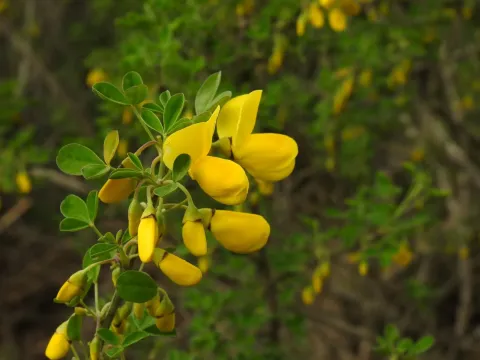
Tree broom
Cytisus arboreus
Tree broom (Cytisus arboreus) is a significant species within the Fabaceae (legume) family, native to the Mediterranean region and North Africa. It is a deciduous shrub characterized by its robust growth and striking floral displays, widely valued in ornamental horticulture.
What the section contains
Tree broom
The culture thrives in well-drained, slightly acidic to neutral soils and requires full sun exposure to maintain its structural integrity and abundant flowering. It is notably drought-tolerant once established but struggles in heavy, waterlogged clay soils which often induce root rot.
Climatic requirements for Cytisus arboreus are specific: it prefers mild winters and hot summers. In colder temperate zones, the plant requires a sheltered position to avoid frost damage to its tender buds and young shoots during the late winter period.
The practical application of tree broom is primarily landscape-based, utilizing the shrub for slope stabilization and rock gardens. Its nitrogen-fixing capability makes it a valuable species for enhancing soil health in low-nutrient environmental conditions.
Agrotechnical maintenance focuses on pruning, which should be performed immediately after the flowering period to maintain a compact shape. Avoid hard pruning into old wood, as the plant does not regenerate easily from dormant buds located on mature, thick branches.
Pests such as aphids and leaf-eating moths are the primary threats to the foliage of Cytisus arboreus. These insects can quickly diminish the aesthetic appeal of the shrub and weaken the plant if infestations remain uncontrolled during the active growth season.
Powdery mildew is a prevalent fungal disease that affects the plant when air circulation is poor or humidity levels remain consistently high. This condition can be mitigated by ensuring proper plant spacing and avoiding overhead irrigation during humid weather.
Leaf spot infections can also occur, causing premature defoliation. Sanitation measures, such as the prompt removal and disposal of infected plant parts, are essential to prevent the spread of spores to healthy branches and neighboring plants.
Root system pests, particularly soil-dwelling grubs, can cause unexpected decline in vigour. Monitoring for yellowing leaves or stunted growth provides an early warning to inspect the root zone for insect damage before it becomes irreversible.
Overall, maintaining the health of the tree broom requires regular monitoring and preventative care. Utilizing systemic fungicides and targeted insecticides only when strictly necessary helps maintain the delicate ecological balance of the ornamental site.