
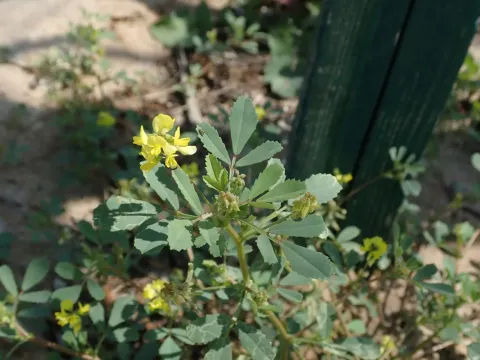
Trigonella glabra
Trigonella glabra
The optimal time for sowing Trigonella glabra is early spring, once the soil has warmed up to 8-10 degrees Celsius. As a cold-hardy species, early planting allows the crop to maximize the use of spring soil moisture.
What the section contains
Trigonella glabra
Seeds should be sown at a shallow depth, approximately 2-3 centimeters. Due to their small size, ensuring a fine tilth and good seed-to-soil contact is essential for rapid and uniform germination across the field.
In regions with milder climates, autumn sowing can be performed provided that the plants have enough time to establish a root system before the onset of hard frosts. This strategy can improve the crop's resilience.
Seeding density depends on the production goal: higher density is used for green biomass production, while lower density is preferred for seed multiplication. Avoiding overcrowding is crucial to prevent lodging and ensure airflow.
Standard row cultivation with 15-20 centimeters between rows is recommended. This setup provides sufficient space for light penetration and simplifies weed control and field management throughout the growing season.
Trigonella glabra belongs to the Fabaceae family and is generally undemanding regarding soil fertility. It thrives in loamy and sandy-loam soils, provided there is adequate drainage to prevent waterlogging.
This crop exhibits strong drought tolerance, making it an excellent candidate for regions with limited rainfall. Its deep root system allows it to efficiently extract water from lower soil profiles during dry spells.
The ideal soil pH is neutral or slightly alkaline. In acidic soil conditions, liming is recommended to stimulate the activity of symbiotic nitrogen-fixing bacteria, which are vital for the plant's health.
The plant is highly photophilous and sensitive to shading; therefore, fields must be open and receive full sunlight throughout the day. Shade significantly inhibits development and reduces overall plant biomass.
It is best used in rotation with cereals or row crops. To maintain soil health and reduce the risk of pathogen buildup, it should not be grown on the same plot more frequently than every 3-4 years.
Yield of green biomass for Trigonella glabra can range from 15 to 25 tons per hectare, depending on moisture availability and soil nutrient levels during the active growth phase.
For seed production, yields typically average between 1 and 1.5 tons per hectare. Success in seed harvesting depends heavily on the timing to avoid natural shattering of the mature seed pods in the field.
Applying phosphorus and potassium fertilizers during the budding stage can significantly enhance productivity. Proper micronutrient balance is essential for legume crops to support robust development.
Inter-row cultivation during the early stages of growth helps improve soil aeration and reduces weed competition, which leads to a more uniform and vigorous development of the crop canopy.
Selecting certified, region-specific varieties is a critical factor for achieving high yields and ensures that the crop reaches its full biological potential under local environmental conditions.
Root rot is the primary threat to Trigonella glabra, typically occurring in poorly drained soils. Pathogenic fungi attack the root crown, causing plants to wither prematurely and significantly thinning the stand.
During the flowering period, plants may become susceptible to powdery mildew, particularly when there are rapid temperature fluctuations and high relative humidity levels, which favor fungal spread.
Nodule weevils are the most concerning pests, as they attack young seedlings early in the season. Severe infestations can devastate a new crop, necessitating vigilant scouting and appropriate control measures.
Aphids may infest the tender shoot tips, extracting sap and causing leaf curling or stunted growth. If populations reach economic thresholds, timely application of integrated pest management methods is required.
Disease prevention centers on strict crop rotation, the use of high-quality, disease-free seed, and the diligent removal of weeds that can harbor viruses or serve as breeding grounds for insect pests.
Harvesting for green biomass is best performed during the full flowering stage, as this is when the concentration of nutrients and essential phytochemicals in the plant tissue is at its highest.
When harvesting for seeds, timing is critical. Harvesting should commence when the pods have turned brown and the seeds are firm. Premature harvest results in immature seeds, while delay leads to shattering losses.
A two-stage harvesting process is recommended: mowing and swathing, followed by combine threshing after the material has dried. This approach minimizes seed damage and harvest losses.
Final seed moisture content should be reduced to 12-14 percent for safe, long-term storage. Drying should be conducted under controlled temperatures to ensure seed viability and prevent mold growth.
Post-harvest processing involves cleaning and grading the seeds. Proper storage in cool, dry conditions is essential to maintain the quality of the product for agricultural or industrial use.