
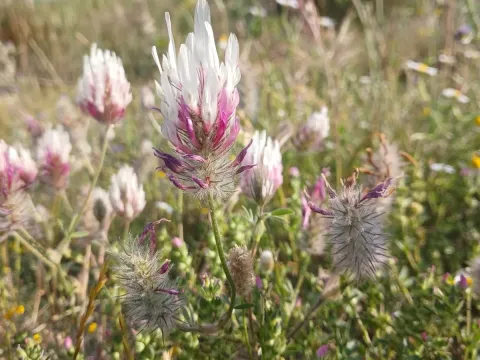
Trifolium dichroanthum
Trifolium dichroanthum
Trifolium dichroanthum is a perennial herbaceous plant belonging to the legume family (Fabaceae), known for its ecological and agricultural value.
What the section contains
Trifolium dichroanthum
The optimal sowing period is typically early spring, allowing the seeds to benefit from soil moisture and establish a strong root system.
Seeds should be placed at a shallow depth of 1–2 centimeters, ensuring sufficient soil-to-seed contact for uniform germination.
The seeding rate must be carefully calculated based on seed viability and the intended density of the future pasture or hay meadow.
In certain regions, dormant seeding or late autumn sowing can be employed to enhance early spring growth through natural cold stratification.
This species thrives in well-drained, fertile soil types, preferring a slightly acidic to neutral pH balance for optimal nutrient availability.
It requires adequate sunlight to ensure robust growth and flower production, making it less suitable for densely shaded areas.
While showing moderate drought resistance, the plant benefits significantly from consistent rainfall during its peak vegetative growth phase.
Symbiotic nitrogen-fixing bacteria are essential for the health of this legume; therefore, soil inoculation may be required in some fields.
The ideal temperature for development is within the temperate range, avoiding extremes that could limit physiological activity and biomass production.
Biomass productivity depends heavily on soil fertility management, specifically the application of phosphorus and potassium-based fertilizers.
When managed properly, the crop supports multiple harvests per season, providing a steady supply of high-quality forage.
The nutritional profile of this clover makes it an excellent component for mixed pasture systems, improving livestock weight gain and health.
Yield stability is maintained by the plant's deep root structure, which helps it recover quickly after mowing or controlled grazing cycles.
Seed yield varies depending on pollinator activity and environmental conditions during the flowering stage, which is crucial for stand regeneration.
Common pathological threats include fungal infections such as powdery mildew, especially when humidity levels remain high for extended periods.
Pest pressure is frequently driven by clover weevils, which can cause significant damage to foliage and developing buds if left unmanaged.
Integrated pest management strategies, including proper crop rotation and the selection of resistant genotypes, are recommended for long-term control.
Early competition from weeds can severely suppress the growth of young plants, necessitating timely intervention during the establishment phase.
Regular field scouting is vital to detect signs of disease and pest infestation, allowing for targeted and effective agricultural responses.
For high-quality forage, harvesting should occur at the onset of flowering, which ensures the best balance of protein and digestible fibers.
Hay production requires careful handling during the drying process to maximize leaf retention, as the leaves contain the highest nutrient density.
Seed harvest is performed once pods reach maturity, typically when the seeds are fully developed and show characteristic coloration.
Using appropriate machinery helps reduce losses and maintains the integrity of the harvested forage for subsequent storage.
Post-harvest residues contribute to soil health by providing organic matter and residual nitrogen fixed during the growing season.