
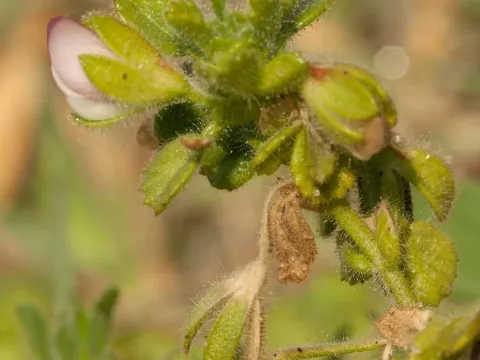
Toothed Restharrow
Ononis dentata
Toothed Restharrow is an annual herbaceous plant belonging to the Fabaceae (Legume) family. It is characterized by a taproot system and erect, branched stems covered with glandular hairs.
What the section contains
Toothed Restharrow
Sowing should be carried out in the spring when the soil temperature reaches 10–12 degrees Celsius. It is crucial to ensure sufficient moisture in the topsoil for uniform germination of the seeds, which require preliminary scarification.
The seeding rate depends on soil fertility and the intended method of harvest. Seeds are sown at a shallow depth, usually no more than 1.5–2 centimeters, ensuring firm contact between the seed and the soil environment.
The optimal planting pattern involves row spacing of 30 to 45 centimeters. This facilitates subsequent maintenance of the crop, allowing for effective weed control at the beginning of the plant's vegetative stage.
Seedlings emerge 10–14 days after sowing, provided that the temperature regime is maintained and there is no over-compaction of the topsoil layer.
The crop is light-loving and heat-loving, so industrial cultivation requires open, well-lit areas. Shading leads to stem elongation and a decrease in overall biological productivity.
Toothed Restharrow prefers light, sandy, or loamy soils with good aeration and drainage. Acidic and heavy clay soils are unsuitable, as they inhibit the development of the root system.
The plant shows moderate drought tolerance, but requires regular watering during critical growth stages, especially during budding and flowering. Excessive moisture can lead to the development of root rot.
Soils should have a neutral or slightly alkaline reaction. In poor soils, the application of mineral fertilizers, especially phosphorus-potassium fertilizers, significantly stimulates flowering and improves the quality of the raw material.
The temperature optimum for growth is within the range of 20–25 degrees Celsius. Late spring frosts can damage young seedlings, so sowing dates must be carefully aligned with the regional climate.
The main threat to the crop comes from fungal diseases such as powdery mildew and various types of rust, especially during periods of high air humidity. Regular weeding and a sparse planting pattern help minimize these risks.
Among pests, legume weevils cause the greatest damage by attacking the generative organs of the plant. Timely detection of infestation centers is necessary to prevent the loss of seed material.
Aphids may settle on young shoots, sucking out sap and stunting plant growth. Preventive measures include creating conditions for beneficial insects or using biological insecticides in cases of mass pest outbreaks.
Root rot is the most dangerous condition caused by improper water management. The development of pathogens in the soil is often triggered by water stagnation, making proper site selection the primary protective measure.
To control harmful organisms, crop rotation is highly recommended. It is advisable not to replant the crop on the same plot for at least 3–4 years to prevent the accumulation of specific soil-borne diseases.