
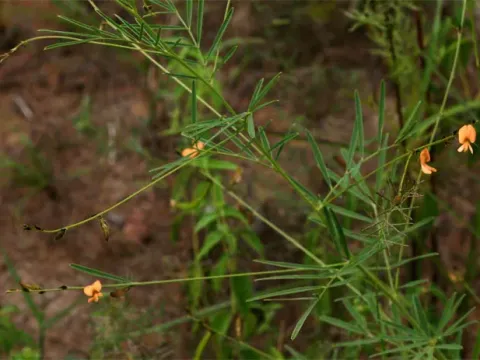
Tephrosia linearis
Tephrosia linearis
Tephrosia linearis is a heat-loving crop, making the timing of sowing critical for successful establishment and uniform germination.
What the section contains
Tephrosia linearis
In tropical and subtropical climates, sowing is typically initiated at the beginning of the rainy season to ensure sufficient moisture for seedling growth.
The seeds of this species possess a hard coat, requiring scarification or soaking treatments to improve the rate and uniformity of emergence.
Row planting with spacing between 30 and 50 cm is recommended to optimize the vegetative development and spatial distribution of the plants.
Seeds should be sown at a depth of 2 to 3 cm, ensuring they are covered with moist soil to prevent desiccation during the germination process.
Belonging to the Fabaceae family, this species is highly valued for its ability to fix atmospheric nitrogen via symbiotic bacteria in root nodules.
It thrives on well-drained sandy and loamy soils, showing significant tolerance to infertile conditions where other crops would fail.
The plant is renowned for its exceptional drought resistance, allowing it to remain productive in regions with prolonged dry spells.
High solar radiation is required for vigorous growth; therefore, sites with full sun exposure are preferred over shaded or partially shaded areas.
Maintenance is minimal once the plant is established, as it develops a robust root system capable of accessing deep-seated moisture and nutrients.
Root rot diseases are the most significant threat, especially when plants are grown in areas prone to seasonal waterlogging or poor drainage.
Nematodes and subterranean insects can pose risks to the root system, causing stunted growth and reducing the plant's overall vigor.
Foliar pests, particularly various lepidopteran larvae, may feed on the leaves, impacting the plant's capacity for photosynthesis and biomass production.
Implementing a proper crop rotation strategy is essential to break the life cycles of common pests and soil-borne pathogens associated with legumes.
Integrated pest management, focusing on cultural practices and biological controls, is the most effective approach for sustaining healthy crops.
When used as a green manure, the biomass should be harvested or incorporated into the soil at the onset of the flowering stage.
This timing ensures that the plant has accumulated maximum nitrogen levels in its tissues before allocating resources to seed production.
For seed harvesting, crops should be monitored until the pods turn brown and start to dry, signaling maturity and readiness for collection.
Incorporating the plant biomass into the soil improves organic matter content and soil physical structure, providing long-term benefits for subsequent crops.
Post-harvest handling requires careful drying of seeds to prevent fungal infection and maintain high viability for the next planting season.