
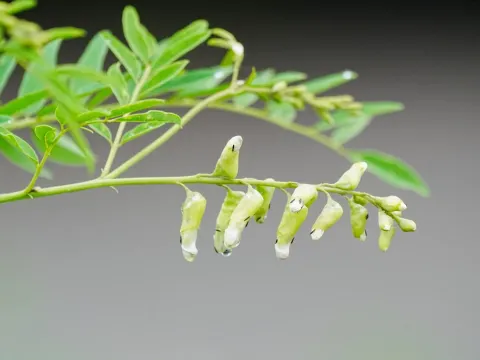
Sophora flavescens
Sophora flavescens
Sowing of Sophora flavescens is typically carried out in early spring when the soil temperature consistently reaches 10–12 degrees Celsius.
What the section contains
Sophora flavescens
Because the seeds possess a hard coat, mechanical or chemical scarification is essential to ensure uniform and rapid field germination.
The recommended planting density involves spacing rows 60–70 cm apart to provide enough area for the root system to expand during the first years.
Seeds should be sown at a depth of 2–3 cm, adjusted according to the soil moisture levels and the texture of the seedbed.
During the first year, the growth is notably slow as the plant focuses on developing a deep taproot, making weed management a top priority.
Sophora flavescens is a perennial herbaceous plant belonging to the Fabaceae family, prized for its extensive and deep-reaching root system.
The plant thrives in full sun, as light availability is directly linked to the accumulation of biologically active compounds within the roots.
It prefers well-drained, light loamy or sandy soils that prevent water stagnation, which is critical to avoid root-related fungal diseases.
The plant exhibits high drought tolerance once established, though supplemental irrigation is beneficial during the initial phases of development.
Native to East Asian regions, it is well-adapted to varied climatic conditions provided there is enough growing season warmth for maturation.
Harvesting the medicinal roots usually begins when the plants are 3–4 years old, ensuring the highest content of active alkaloids and flavonoids.
Commercial yields of dried roots typically range from 15 to 25 decitonnes per hectare depending on site fertility and the level of management.
Nutrient management, particularly adding potash and phosphorus, significantly contributes to root biomass accumulation over the growing cycle.
The harvest cycle must be carefully planned as the root system continues to increase in volume and medicinal value with each passing season.
Proper soil preparation, including deep plowing before planting, is essential to allow the taproots to grow vertically without obstruction.
The most common agricultural challenges include root rot caused by high soil moisture and poor drainage during periods of excessive rainfall.
Fungal leaf spots can occur in dense plantings with low airflow; therefore, maintaining appropriate row spacing is vital for plant health.
Soil-borne pests may pose a threat during the establishment phase, requiring monitoring and, if necessary, integrated pest management strategies.
Crop rotation practices should be strictly observed to prevent the buildup of pathogens common to leguminous plants in the soil.
Regular cultivation of inter-row spaces helps in suppressing weeds and improving soil aeration, which reinforces the plant’s natural defenses.
The roots are harvested in the autumn after the aerial foliage has yellowed, signaling the translocation of nutrients back into the root system.
Mechanical harvesting involves utilizing specialized root lifters capable of penetrating 50–80 cm deep to recover the entire root mass intact.
Post-harvest processing requires immediate washing of the roots to remove soil particles followed by the removal of any diseased or woody debris.
Drying is performed in temperature-controlled facilities at 45–50 degrees Celsius to prevent the degradation of heat-sensitive chemical constituents.
High-quality dried product is identified by a distinct yellowish interior color and an intensely bitter taste, marking its medicinal potency.