
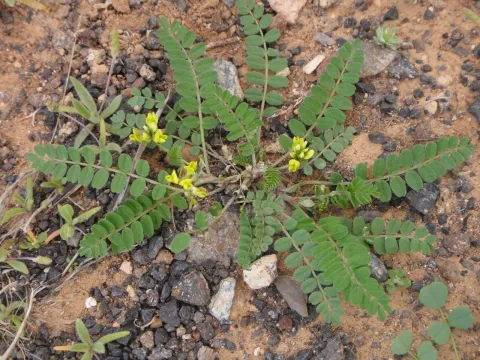
Solander's Milk-vetch
Astragalus solandri
Solander's milk-vetch is a perennial herbaceous plant belonging to the Fabaceae family. Planting is ideally performed in early spring as soon as the soil warms up, typically between 8 and 10 degrees Celsius, to facilitate uniform germination.
What the section contains
Solander's Milk-vetch
The seeds of this species possess a hard coat, requiring a scarification process before sowing to ensure proper water absorption. Without this treatment, the germination rate is significantly reduced due to seed dormancy.
Seeds should be planted at a shallow depth of 1 to 2 centimeters. Placing them deeper can exhaust the seedling's energy reserves before it reaches the surface, leading to poor establishment of the crop stand.
A standard row-planting method is recommended, with row spacing maintained at 30–45 centimeters. This distance provides adequate space for root system development and ensures proper airflow between the plants.
Late autumn planting is also a viable strategy in certain climates. This allows the seeds to undergo natural winter stratification, leading to vigorous growth as soon as the environmental conditions become favorable in the spring.
This crop thrives in sunny locations and requires high levels of light exposure to reach its full development potential. Excessive shading often results in weak biomass production and decreased plant vitality.
Solander's milk-vetch is highly valued for its drought tolerance once established. Its deep taproot system allows it to access moisture from lower soil profiles, making it suitable for regions with variable rainfall.
Well-drained loamy or sandy soils are ideal for the cultivation of this legume. It is highly sensitive to waterlogging, so fields with poor drainage or high water tables should be avoided to prevent root rot.
The plant performs best in neutral to slightly alkaline soil conditions. If the soil is too acidic, liming should be performed well in advance to improve the activity of nitrogen-fixing bacteria residing in the root nodules.
Fertilization with phosphorus and potassium is beneficial for maximizing yield. Additionally, ensuring the soil has the correct rhizobial inoculum can significantly enhance the plant's natural nitrogen-fixing capacity.
Maximum biomass production is typically achieved from the second to the third year of growth. During this period, the plant establishes a robust root network and develops a significant amount of foliage.
The crop is utilized for both high-quality fodder production and as a medicinal source. In livestock farming, it provides a protein-rich addition to animal diets when harvested as hay or silage.
For pharmacological use, the harvest must occur during the peak flowering stage. This timing is critical because the concentration of active pharmaceutical compounds is at its highest within the flowering stems.
When grown for fodder, the crop can tolerate multiple cuttings throughout the growing season. Proper management of cutting height is essential to protect the crown and ensure quick regrowth for subsequent harvests.
Seed production is heavily influenced by the presence of pollinators. Placing beehives near the field can lead to substantially higher seed yields, ensuring the long-term sustainability of the planting.
The main threats to the plant include fungal diseases such as powdery mildew and rusts. These are particularly prevalent in dense stands with poor ventilation or during periods of high atmospheric humidity.
Insect pests, such as weevils, can cause severe damage to the buds and flowers, directly impacting seed set and overall reproductive success. Regular monitoring is necessary to prevent significant yield losses.
Preventive measures include crop rotation and maintaining proper spatial distance from other legumes. These practices help break the life cycles of common pathogens and prevent the rapid spread of infestations.
Chemical intervention should be used only as a last resort and must follow strict safety guidelines to protect the local pollinator population. Integrated Pest Management (IPM) strategies are highly recommended.
Weed control is vital, especially during the first year of establishment. Since Solander's milk-vetch grows slowly initially, mechanical weeding or the use of targeted herbicides is required to prevent competitive exclusion.
For fodder purposes, harvesting is conducted using mechanical mowers at the flowering stage. This timing ensures the best quality of biomass for livestock feed while maintaining the plant's health.
When harvesting for medicinal ingredients, stems are collected carefully to avoid damaging the root system. This manual or semi-automated process ensures the longevity of the perennial planting.
Drying the harvested material must be done in a shaded, well-ventilated area. Rapid, indirect drying helps preserve the essential compounds that give the plant its medicinal properties and nutritional value.
Stored raw materials must be kept in dry, cool, and clean facilities. Proper ventilation is required to prevent moisture accumulation, which could otherwise lead to mold growth and spoilage of the crop.
Seed harvesting should be performed as soon as the pods reach full maturity. Delaying the harvest can result in natural pod shattering, leading to significant seed losses left in the field.