
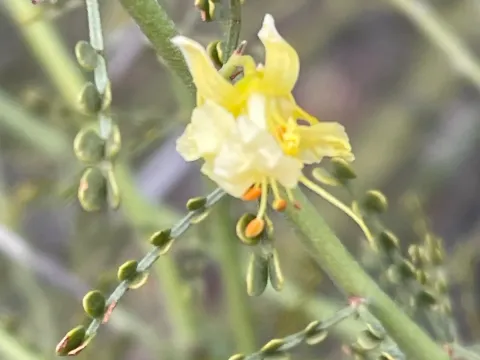
Foothill palo verde
Parkinsonia microphylla
Parkinsonia microphylla, commonly known as the foothill palo verde, belongs to the Fabaceae family. It is a highly specialized tree native to the arid desert regions of North America.
What the section contains
Foothill palo verde
The species is defined by its green photosynthetic bark, which allows it to continue energy production even during periods of leaf drop triggered by extreme drought stress.
For cultivation, the tree requires well-drained, porous soils. It is intolerant of heavy clay or saturated conditions, which can quickly lead to root rot and mortality in the sapling stage.
Climate requirements include high solar radiation and low relative humidity. It thrives in regions where temperatures are consistently high, making it an excellent candidate for xeriscaping.
Proper spacing is essential for mature growth, as these trees need to access sufficient soil volume to support their deep taproots, which can reach great depths in search of moisture.
The primary threat to the foothill palo verde is root rot caused by improper irrigation practices. Maintaining a dry root zone around the base is crucial for tree longevity.
Boring insects represent the main pest concern, as they burrow into the trunk and branches. This damage can reduce the structural integrity of the tree, making it vulnerable to wind.
- Mistletoe infestation
- Stem-boring beetles
- Root fungi (in damp conditions)
Pest management focuses on maintaining tree vigor through minimal interference. Healthy trees are generally capable of resisting insect infestations through their natural chemical defenses.
Monitoring for signs of twig dieback is recommended as a part of standard orchard maintenance to ensure that any isolated disease outbreaks are contained early.