
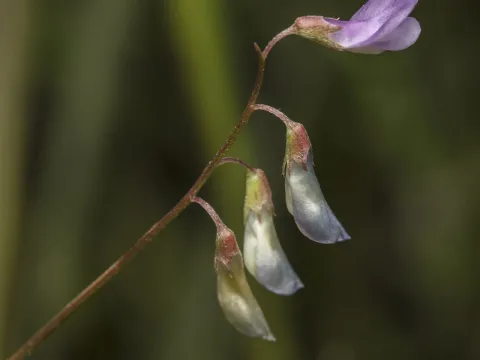
Fine vetch
Vicia parviflora
Fine vetch (Vicia parviflora) is a herbaceous annual plant belonging to the Fabaceae family. Sowing is typically conducted in early spring as soon as the soil reaches proper workability, ensuring that the crop capitalizes on early-season moisture for optimal germination.
What the section contains
Fine vetch
The seeds should be sown at a depth of 3 to 5 centimeters, depending on the soil texture. Row spacing of about 15 centimeters is common, providing enough space for the plants to establish while minimizing competition with opportunistic weed species during the early developmental phases.
Inoculation with specific rhizobium strains is highly recommended before sowing. This process enhances the nitrogen-fixing capacity of the crop, reducing the need for synthetic fertilizers and improving the overall health of the soil profile.
If cultivated as a cover crop, fine vetch can be seeded in late summer to establish significant biomass before the onset of winter. The density of planting can be adjusted based on the intended use, whether for green fodder or soil enrichment purposes.
The plant exhibits a relatively rapid growth rate in its early stages. This allows it to effectively suppress weed germination, contributing to a more sustainable production system with lower dependence on herbicide interventions.
Fine vetch thrives in well-drained, fertile loamy soils. It requires adequate levels of phosphorus and potassium, which are essential for robust vegetative growth and the development of high-quality seeds in the pods.
The crop is well-adapted to temperate climates, showing good resilience to mild fluctuations in weather. However, it is sensitive to waterlogged conditions, which can impede root respiration and encourage the development of soil-borne diseases.
Soil pH levels should ideally be maintained in the neutral range. If the soil is excessively acidic, liming should be performed well in advance of sowing to ensure that the nitrogen-fixing bacteria can perform their role effectively throughout the season.
The plant performs best under full sunlight, although it can tolerate partial shading during its development. Ample light exposure is critical for preventing stem lodging and ensuring that the foliage remains healthy and nutrient-dense.
Proper water management is essential for this species. While it has some drought tolerance due to its taproot system, periodic rainfall or irrigation during the flowering phase is crucial for maximizing biomass and seed yield potential.
Leaf-feeding beetles and aphids are among the most common pests affecting fine vetch. Monitoring for early signs of infestation is vital, as heavy populations can severely stunt plant growth and reduce the overall fodder quality.
Fungal diseases, such as powdery mildew and various leaf spots, are frequent threats, especially in humid conditions with limited air circulation. Maintaining proper planting density helps to minimize these risks by improving airflow within the crop canopy.
Root rots caused by soil-borne pathogens can be detrimental in heavy or compacted soils. Implementing a sound crop rotation schedule that limits the frequency of legumes on the same field helps to break the disease cycle and improve crop longevity.
Effective pest control strategies include both chemical and biological approaches, such as the use of resistant varieties and the promotion of beneficial insects that predate on crop pests. Integrated pest management (IPM) is highly encouraged.
- Utilize high-quality, treated seed to prevent soil-borne infections.
- Avoid continuous cropping of legumes to reduce pest pressure.
- Monitor fields regularly during the vegetative and flowering stages.
Harvesting for green fodder should occur at the onset of flowering. This stage ensures the highest protein content and digestibility, making the forage highly suitable for livestock feed requirements during the growing season.
When harvesting for hay, it is essential to cut the crop during dry, sunny weather. Fast drying is necessary to retain the nutritional value of the leaves and to prevent the degradation of nutrients caused by excessive exposure to sunlight or humidity.
For seed production, harvesting is conducted once the pods have turned brown and the seeds reach physiological maturity. Timely harvesting is critical to prevent seed shattering and loss in the field due to environmental factors.
Post-harvest processing involves cleaning and drying the seeds to a moisture level below 14 percent. Proper storage in cool, dry conditions is necessary to maintain seed viability and prevent fungal growth during extended periods of storage.
Crop residues left after the harvest can be incorporated back into the soil as organic matter. This practice not only recycles essential nutrients but also improves the structure and microbial activity of the soil for subsequent planting cycles.