
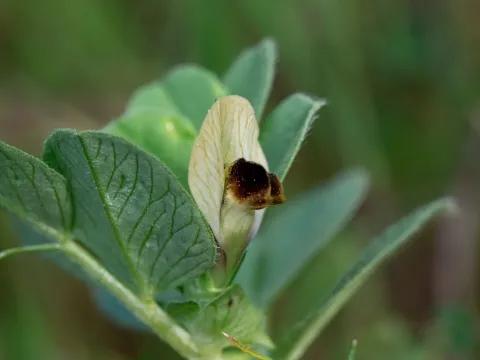
Galilean vetch
Vicia galilaea
Galilean vetch is typically sown in the autumn season to align with the Mediterranean climate cycle. Early planting allows the crop to establish a robust root system before the onset of the drier spring months, maximizing the use of winter rainfall.
What the section contains
Galilean vetch
The optimal seeding depth ranges from 3 to 5 centimeters, ensuring sufficient moisture availability for germination while allowing for effective emergence. Precise soil preparation is essential to achieve uniform stands in field conditions.
Spring sowing may be practiced in certain climates, but it requires careful moisture management. Ensuring soil temperatures are consistently above 8–10 degrees Celsius promotes vigorous initial growth and helps the crop compete against early weeds.
Seeding rates are adjusted based on the specific end-use goal. For green manure or biomass production, higher densities are employed to maximize ground cover, whereas lower densities are used for seed production to ensure better plant aeration.
Seed inoculation with appropriate rhizobial strains is highly recommended for Galilean vetch to improve symbiotic nitrogen fixation. This simple practice significantly enhances plant vitality and reduces the need for synthetic nitrogen fertilizers.
Galilean vetch (Vicia galilaea) is a legume species native to the Eastern Mediterranean, including regions of Israel and surrounding countries. It is well-adapted to semi-arid conditions and thrives in landscapes characterized by calcareous and well-drained soils.
The plant demonstrates remarkable plasticity regarding water requirements. While it prefers moist growing seasons, it possesses biological mechanisms that allow it to complete its reproductive cycle before the peak heat and drought of summer begin.
It prefers neutral to slightly alkaline soil pH levels. The crop is intolerant of waterlogging, which can easily lead to root rot pathogens; thus, selecting sites with good drainage and slope topography is critical for successful cultivation.
Sunlight exposure is a limiting factor for biomass yield. Galilean vetch performs best in open field environments where competition for light is minimized. It should not be intercropped with taller, aggressive species that could suppress its early growth.
The crop serves as an excellent nitrogen fixer, contributing to soil health and fertility. By incorporating the residues back into the soil, farmers can significantly improve the nutrient profile for subsequent crops in a standard rotation.
The biomass yield of Galilean vetch is highly dependent on rainfall distribution during the winter and early spring. In good years, it can provide significant quantities of highly palatable green fodder rich in digestible crude protein.
As a forage crop, it is particularly valued for its protein content, making it an excellent dietary supplement for livestock. It is often harvested at the peak of flowering to ensure the highest nutritional quality before lignification occurs.
Seed yield varies depending on insect pollinator activity. As a legume that often benefits from cross-pollination, the proximity of managed or wild bee populations can positively impact the final volume of seed harvested from the field.
Management practices, including appropriate phosphorus and potassium fertilization, are essential to boost both biomass and seed productivity. Proper nutrient levels help the plant endure environmental stressors such as fluctuating spring temperatures.
Regular field scouting allows for timely adjustments in management, such as supplemental irrigation if possible or targeted pest control, ensuring that the crop reaches its full productive potential at the end of the season.
Fungal diseases such as powdery mildew and various rusts are the primary biological threats to Galilean vetch, especially during seasons with high humidity or frequent late-spring rains. These pathogens can drastically reduce forage value.
Insect pests, including aphids and pod borers, pose significant risks. Aphids can cause direct damage by feeding on plant sap and can serve as vectors for various mosaic viruses that stunt plant growth and reduce overall yield.
Seed-feeding beetles (bruchids) are a major challenge for stored seeds and can also infest the pods while still in the field. Effective post-harvest drying and chemical or heat treatment of the seeds are vital for storage longevity.
Weed control is critical during the first month of establishment, as the slow initial growth of the vetch makes it vulnerable. Integrated weed management, including mechanical cultivation, is often more effective than relying solely on herbicides.
Maintaining a diverse crop rotation is the most effective way to prevent the buildup of soil-borne pathogens. A gap of at least three years between planting legumes on the same field is recommended for long-term farm sustainability.
Harvesting for green fodder should be executed during the full bloom stage. This phase provides the optimal balance between biomass volume and nutritional density, ensuring that the harvested material is soft and easily digestible for livestock.
When producing hay, careful drying in windrows is required. The use of modern hay conditioners can help maintain the integrity of the leaves, where the majority of the nutrients are concentrated, preventing the loss of high-quality proteins.
Seed harvesting should occur when the pods have turned brown and the seeds have reached physiological maturity. Direct combining is common, provided the crop is uniform; otherwise, a two-stage harvest (cutting and drying) is preferred.
Post-harvest handling of seeds requires moisture content monitoring. Seeds should be dried to approximately 12–14% moisture to prevent spoilage and ensure their viability for future planting seasons or market sale.
Proper storage in cool, dry, and rodent-proof facilities is necessary to protect the harvested seed from insects and mold growth. Regular inspection of stored stocks ensures that the seeds remain healthy and free from contaminants.