
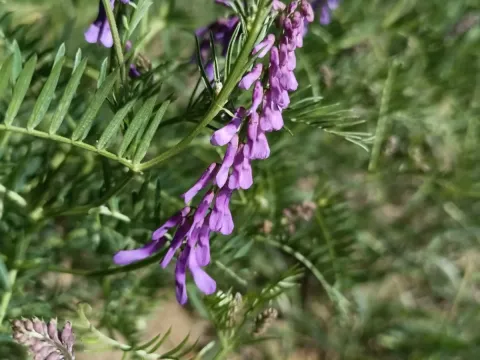
Fine-leaved vetch
Vicia tenuifolia
Fine-leaved vetch (Vicia tenuifolia) is a perennial leguminous plant known for its hardiness and adaptability. Planting is typically carried out in early spring or late summer to allow the roots to establish before extreme temperature fluctuations occur.
What the section contains
Fine-leaved vetch
The ideal soil conditions for sowing include well-drained, fertile soil with a pH level between neutral and slightly alkaline. Proper seedbed preparation is essential to eliminate weeds that could compete with the slow-growing seedlings during the first season.
Seeds should be sown at a depth of approximately 2–4 centimeters to ensure adequate soil contact and moisture uptake. Consistent moisture during the germination phase is critical for achieving uniform plant density.
When used in mixed swards, it is often paired with compatible grasses to enhance overall structural stability and forage diversity. Seed density should be carefully calibrated to balance the ratio of legumes to grasses.
Inoculation with specific Rhizobium bacteria at the time of sowing is recommended to maximize the plant's nitrogen-fixing potential, which significantly reduces the need for synthetic fertilizers.
Vicia tenuifolia is highly valued for its drought tolerance and resilience in diverse environments. It thrives in open, sunny locations where it can access full light, which is necessary for vigorous growth.
The plant is versatile regarding soil types, performing well on loamy, sandy, and silty soils, provided there is efficient drainage. It does not tolerate waterlogging, as excessive soil moisture can lead to root degradation.
Temperature range is quite broad for this species; it exhibits excellent winter hardiness, allowing it to survive frost cycles and regrow vigorously in the following spring.
Because it is a perennial legume, it contributes significantly to soil health by improving soil structure through its deep, complex root system and adding nitrogen back into the ecosystem.
Minimal fertilizer input is required after establishment, making this crop a sustainable choice for long-term pasture improvement and low-input agricultural systems.
The yield of fine-leaved vetch is characterized by its high nutritional value, specifically high protein content, which is essential for livestock production. It remains productive for several years when managed correctly.
Annual yields of green matter can vary depending on soil fertility and environmental conditions, generally falling within a robust range for perennial fodder crops. Proper management of grazing or cutting cycles can optimize yield.
Integrating phosphorus and potassium-rich fertilizers can boost the plant's ability to produce robust seed pods and increase the biomass accumulation during the primary growth season.
Peak biomass yield typically occurs in the third and fourth years post-establishment. Beyond this point, productivity may plateau, suggesting a need for rotational management or reseeding strategies.
When used as hay, the nutritional profile is preserved well if the crop is harvested at the right phenological stage, offering a high-quality forage option for cattle and sheep during winter months.
Like many legumes, Vicia tenuifolia can be susceptible to fungal infections such as powdery mildew, especially in humid or poorly ventilated conditions. Ensuring proper air circulation is a key preventive measure.
Pests like aphids and certain species of weevils may target the foliage and developing seeds. Monitoring programs are essential to detect infestations early and allow for targeted management.
Root diseases, often caused by soil-borne pathogens, can occur in fields where legumes have been monocropped for extended periods. Practicing diverse crop rotation is the best long-term defense.
Integrated pest management (IPM) strategies, including the encouragement of natural predators, are recommended to maintain pest populations below economic injury levels.
- Use certified, disease-free seed for planting.
- Rotate crops to minimize build-up of soil pathogens.
- Regular field scouting to monitor pest levels.
The optimal harvest timing for hay is at the beginning of the flowering stage, when the concentration of crude protein and essential nutrients is at its maximum point before the stems become overly fibrous.
Mechanized mowing with a conditioner attachment helps shorten the drying time for the cut forage, which is crucial for nutrient retention and preventing quality loss due to rain exposure.
Harvesting for seeds requires waiting until the seed pods have reached full maturity, turning a darker color. It is vital to harvest before the pods dry to the point of shattering to prevent significant yield losses.
Post-harvest cleaning and drying to reach a low moisture content are essential for long-term seed storage. Seeds should be stored in cool, dry conditions to maintain high viability for the next season.
For fresh forage applications, rotational grazing should be practiced to prevent overgrazing, which allows the plant sufficient time to recover and regrow for subsequent harvests within the same year.