
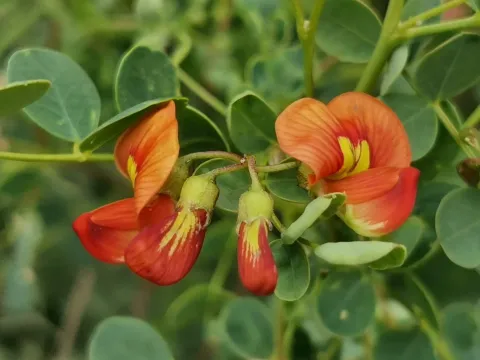
Oriental bladder senna
Colutea orientalis
The propagation of Colutea orientalis is primarily achieved through seeds, which should be sown in early spring after undergoing a brief period of cold stratification.
What the section contains
Oriental bladder senna
Seedlings are typically raised in seedbeds with light, well-draining soil, ensuring that the seeds are covered with only a thin layer of substrate to facilitate emergence.
Vegetative propagation via softwood cuttings taken in late spring or semi-hardwood cuttings in late summer can also yield high success rates if proper humidity is maintained.
Transplanting container-grown plants into their permanent location can be done throughout the growing season, provided that irrigation is consistent during the first few weeks.
Spacing requirements depend on the intended use; for hedges, planting at intervals of 1 meter is recommended, while individual specimens need more space to develop their broad canopy.
Colutea orientalis is a robust member of the Fabaceae family, native to regions with rocky, well-drained slopes, where it has evolved to thrive in nutrient-poor soils.
The plant demonstrates exceptional tolerance to drought and heat, making it an excellent candidate for xeriscaping and sustainable gardening projects in arid climates.
Sun exposure is a critical factor for development; the shrub requires full sun to maintain its dense foliage and to stimulate the production of its characteristic papery pods.
The soil profile should ideally be slightly alkaline or neutral, containing enough mineral content to support the symbiotic relationship between the roots and nitrogen-fixing bacteria.
While mature plants are highly resistant to winter conditions, young shrubs may benefit from protective mulch around the root zone during their first winter in colder geographic zones.
The primary harvest for this culture is focused on seed collection, which occurs once the bladder-like pods have matured and turned a brownish, parchment-like color in late summer.
Pods should be collected before they dehisce or burst on the shrub to ensure the highest yield of viable seeds, which can then be dried in a cool, well-ventilated area.
In ornamental horticulture, the harvest of flowers or pods is minimal, as the shrub is mostly valued for its aesthetic contribution to the landscape rather than commercial agricultural output.
Pruning is a form of mechanical harvest that helps maintain the shrub's health and vitality, typically conducted in late winter or early spring before the onset of new growth.
If cultivated for landscape restoration purposes, pruning promotes denser branching, which helps in soil stabilization and prevents erosion on sloped terrains.
The plant is relatively resistant to major pests, but occasionally, aphid infestations may occur on the tender shoots during the spring, which can be managed with targeted biological controls.
Fungal diseases, specifically leaf spot or powdery mildew, can appear in environments with stagnant air or excessive humidity, requiring improved ventilation and sanitation.
Maintaining the plant's health through appropriate irrigation—avoiding waterlogged soil—is the most effective way to prevent root rot and other moisture-related pathogens.
Integrated pest management strategies should prioritize the use of natural predators, such as ladybugs, to manage aphid populations without damaging the plant's ecosystem.
Regular inspection of the foliage and stems allows for the early detection of stress factors, enabling quick intervention to keep the specimen healthy and visually appealing.