
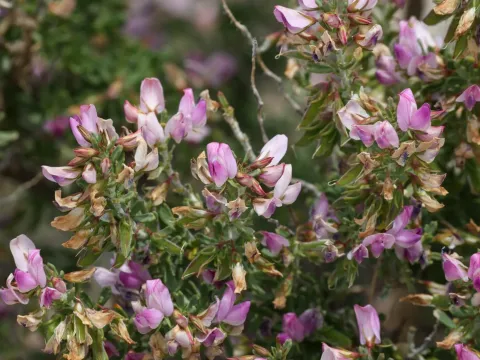
Ononis tridentata
Ononis tridentata
Ononis tridentata, commonly known in its native regions, is a perennial shrub belonging to the Fabaceae family. It is primarily distributed across the Iberian Peninsula and parts of the Mediterranean, where it thrives in harsh, dry climates.
What the section contains
Ononis tridentata
The plant is highly valued for its ability to grow in nutrient-poor, rocky, or saline soils where traditional agricultural crops struggle. Its survival strategy is centered on extreme drought tolerance and deep root penetration, allowing it to access moisture in arid profiles.
Regarding site requirements, this species demands excellent solar exposure and minimal humidity around the root zone. Poorly drained, waterlogged soils are detrimental to its health, often leading to rapid root decay and plant decline within the cultivation plot.
Botanically, it is characterized by woody stems and unique tridentate leaves that minimize transpirational water loss. This morphology makes it a model species for restoring degraded land, preventing soil erosion, and stabilizing steep slopes in semi-arid environments.
Its agricultural utility is currently being explored in the context of sustainable grazing systems and land reclamation projects. By maintaining ground cover in challenging environments, it plays a vital role in local ecosystems and can provide limited forage value.
The main pathological threats to Ononis tridentata are soil-borne fungal infections, specifically root and crown rots. These diseases are almost exclusively linked to excess moisture and insufficient soil aeration, which compromise the plant's natural resilience.
Pest pressures often involve coleopteran insects, particularly weevils that specialize in feeding on leguminous foliage. Heavy infestations can lead to significant biomass loss, potentially stunting growth and reducing the overall vigor of the perennial shrub.
Management of these threats focuses on preventive agronomy, emphasizing the necessity of site selection with high percolation rates. Avoiding irrigation systems that produce stagnant water is the single most important factor in keeping the crop disease-free.
Monitoring programs should be implemented during the peak vegetative season to detect early signs of insect activity. Quick identification allows for targeted interventions, avoiding broad-spectrum chemical applications that might affect local pollinator populations.
Integrated pest management strategies are recommended, focusing on maintaining biodiversity around the cultivation area. By encouraging natural predators of common pests, farmers can achieve a sustainable balance without the need for intensive chemical input.