
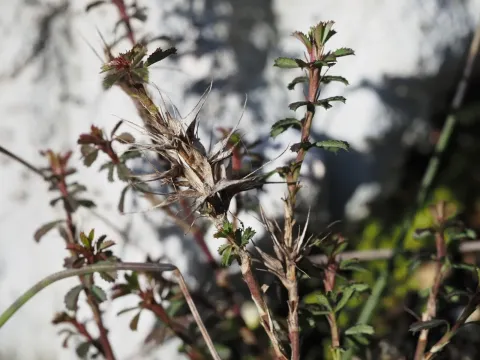
Ononis minutissima
Ononis minutissima
Ononis minutissima is a perennial herb belonging to the Fabaceae family. It is recognized for its high adaptability to challenging environments and its presence in arid, rocky landscapes.
What the section contains
Ononis minutissima
Sowing typically takes place in early spring when temperatures remain consistent. Given the hard seed coat of the species, scarification is highly recommended to improve germination rates significantly.
Seeds should be planted at a shallow depth of approximately 1–2 centimeters. This depth ensures that the germinating embryo can reach the surface efficiently without exhausting its energy reserves.
The optimal planting density should be managed to prevent resource competition among young plants. Maintaining adequate space between rows facilitates easier mechanical weeding and aeration of the soil.
Early development of the crop focuses on establishing a strong root system, which is essential for survival in its natural habitat. During the first few weeks, moisture management is key to success.
This species thrives in sunny, open locations with excellent drainage. It is highly intolerant of waterlogged soils, which can trigger fungal diseases and root decay during the growth season.
Ononis minutissima performs best in calcareous, alkaline, or sandy soils. These conditions mimic its native Mediterranean range and encourage the production of secondary metabolites in the roots.
Climate-wise, the plant is well-adapted to warm, dry summers and cool winters. It exhibits significant drought tolerance once established, making it a sustainable choice for water-limited agriculture.
Nutrient requirements are relatively modest compared to intensive cash crops. Proper calcium levels are vital for healthy growth, so lime application may be necessary if the soil pH is too low.
Avoid excessive nitrogen fertilizers, as they may lead to rank vegetative growth at the expense of root development. Balanced, low-intensity fertilization is usually sufficient for optimal performance.
The primary economic output of Ononis minutissima is its roots, which are harvested for medicinal purposes. Harvesting is generally scheduled for the end of the second or third year of growth.
When cultivated under favorable conditions, the root yield can vary based on soil structure and rainfall patterns. Careful planning during the planting stage ensures a consistent output over multiple years.
The above-ground biomass serves as an important nectar source for pollinators, contributing to biodiversity within the agricultural ecosystem. Beekeeping can be integrated into the farm strategy alongside crop harvesting.
Mechanical harvesting requires specialized equipment designed for root crops to minimize damage. The process must be conducted in dry conditions to preserve the quality of the harvested medicinal material.
Post-harvest processing involves cleaning and drying the material at controlled temperatures to prevent mold growth. Proper storage ensures that the chemical composition of the root remains stable over time.
Fungal pathogens associated with excessive soil moisture pose the greatest threat to plant health. Implementing a high-quality drainage system is the most effective way to prevent these issues.
Insect pests, including various types of aphids and leaf-eating beetles, can cause localized damage. Integrated pest management strategies, focusing on biological controls, are preferred to maintain organic standards.
Weed control is critical during the establishment phase, as the crop is slow-growing initially. Mechanical weeding between rows remains the most practical approach for large-scale operations.
Root damage from rodents can occur in some regions, necessitating preventative measures to protect the crop. Regular monitoring of the plantation area is essential for early detection of potential problems.
Failure to follow proper crop rotation practices can lead to the build-up of soil-borne pathogens. A minimum rotation interval of four to five years is recommended to maintain a healthy growing environment.