
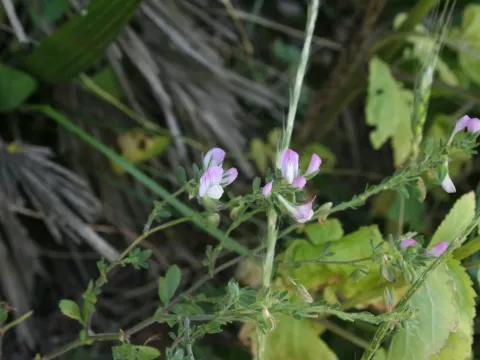
Ononis hispida
Ononis hispida
Ononis hispida, known for its resilience, belongs to the Fabaceae family. As a leguminous crop, it is particularly valued for its ability to thrive in arid environments where traditional forage crops may struggle to establish.
What the section contains
Ononis hispida
The optimal sowing time is early spring, once the soil has warmed to at least 10 degrees Celsius. This ensures timely germination and allows the crop to establish a deep root system before the onset of summer heat.
Seeds of Ononis hispida have a hard coat, which necessitates scarification before planting. This process significantly improves the germination rate, ensuring a uniform stand of plants throughout the field.
Planting is typically done in rows with a spacing of 30-45 centimeters. This configuration balances the plant population density with the need for mechanical weeding and proper airflow between rows to prevent disease.
The sowing depth should be kept shallow, approximately 1-2 centimeters. Over-planting can lead to poor emergence rates, especially if the soil surface forms a crust after light irrigation or rainfall.
This species is exceptionally drought-tolerant and well-adapted to semi-desert or steppe climates. It serves as an excellent option for land reclamation in areas prone to desertification and low rainfall.
Ononis hispida performs best in light, sandy or loamy soils with good drainage. It is notoriously sensitive to waterlogged conditions, which can quickly lead to root rot and mortality in a crop stand.
Exposure to full sunlight is critical for the healthy development of this crop. Shade from neighboring vegetation or buildings will negatively impact growth rates and significantly reduce biomass yield per hectare.
The crop is tolerant of various soil pH levels, including slightly saline soils. Its ability to tolerate salinity makes it an important candidate for planting in degraded lands where other crops would fail.
While the plant is hardy, it benefits from moderate phosphorus fertilization during the initial establishment phase. This promotes robust root growth, enabling the plants to tap into deeper soil moisture reservoirs.
The primary economic use of Ononis hispida is as a forage crop for extensive grazing systems. Its ability to remain green during dry spells provides a valuable feed source for livestock in arid regions.
Yields vary based on regional rainfall but generally provide a steady supply of biomass. It can be harvested as hay, contributing to sustainable farming practices where input requirements are minimal.
The plant is recognized for its value to apiculture. Its flowers attract pollinators, providing a high-quality forage base for bees, which in turn leads to the production of niche, high-value honey.
Root harvesting is an important secondary industry for this crop, as the roots are rich in bioactive compounds. These are used in the production of herbal medicines and various botanical extracts.
Ononis hispida also improves soil health through nitrogen fixation. By incorporating this plant into a crop rotation, farmers can enhance soil fertility, reducing the need for synthetic nitrogen fertilizers.
Ononis hispida is relatively robust against common agricultural pests, though certain weevil species can cause occasional damage to foliage. Monitoring should focus on preventing these outbreaks during the vegetative stage.
Fungal diseases are rarely an issue unless the crop is grown in low-lying, damp areas. Proper soil management and ensuring adequate drainage are the most effective ways to mitigate the risk of root pathogens.
Weed competition can be a threat during the establishment phase. Using mechanical cultivation between rows is essential for keeping weeds in check until the Ononis hispida plants are tall enough to shade them out.
In cases of severe pest or disease pressure, biological controls are preferred over broad-spectrum chemicals. This is particularly important for maintaining the plant's value as a habitat for beneficial insects and pollinators.
Crop rotation remains the best preventative strategy against soil-borne pathogens. A minimum 4-year gap between planting Ononis hispida on the same site is recommended to keep the field healthy and productive.
Harvesting for forage is best performed during the peak flowering stage. This timing ensures the highest nutritional value in the biomass before the plants begin to lignify and lose digestibility.
When harvesting for seed production, growers must be careful to monitor moisture levels. The pods can shatter easily when dry, so using a two-stage harvest method with windrowing is highly recommended.
Post-harvest handling is critical, as seeds must be dried properly to prevent spoilage. Using modern ventilation systems in storage facilities helps maintain long-term seed viability for future planting cycles.
Harvesting roots requires deep plowing equipment to extract the root system without excessive damage. Once extracted, the roots must be thoroughly cleaned and dried to maintain the quality of the medicinal extracts.
Equipment calibration is essential when dealing with small-seeded leguminous crops to minimize losses. Using specialized headers and adjusted drum speeds ensures the highest possible recovery of seed yields.