
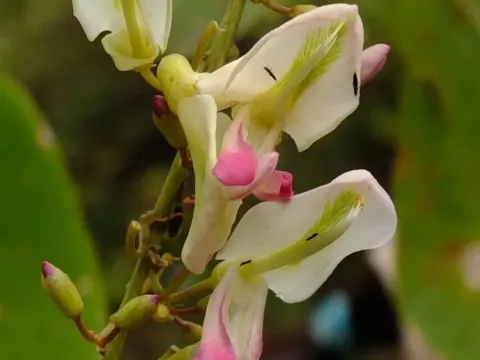
Pueraria wallichi
Pueraria wallichi
The sowing of Pueraria wallichi is typically conducted in the spring once soil temperatures reach a consistent range of 15-18 degrees Celsius. Stable temperatures are essential for ensuring uniform germination and early establishment of the root system.
What the section contains
Pueraria wallichi
Prior to planting, thorough tillage is required to create a fine, weed-free seedbed. Given the small size of the seeds, achieving good soil-to-seed contact is crucial for efficient moisture uptake during the initial germination phase.
The recommended planting depth is between 2 and 3 centimeters. Burying seeds too deeply can impede sprout emergence, while sowing them too shallowly may lead to desiccation if topsoil moisture levels are insufficient.
Row spacing is generally set at 60-70 centimeters to facilitate mechanical cultivation and weed control. This spacing provides enough room for the plants to expand while allowing machinery to operate without damaging the developing foliage.
Early-stage growth is relatively slow, requiring diligent weed management. Protecting the seedlings from competition during the first few weeks ensures that the crop can successfully establish its dominant position in the field.
Pueraria wallichi belongs to the Fabaceae family and is recognized for its robust growth habit. This plant thrives in sunny environments, requiring high solar radiation to maximize photosynthesis and overall vegetative biomass production.
It adapts well to a variety of soil types, although fertile, well-drained loams are ideal for optimal results. The soil pH should ideally remain within the range of 6.0 to 7.5 to support nutrient availability and healthy root development.
This species exhibits significant drought tolerance due to its deep-reaching root architecture. Nevertheless, consistent water availability during the peak growing season is necessary to ensure vigorous regrowth and high quality of the green matter.
The plant benefits from symbiotic nitrogen-fixing bacteria. In areas where these bacteria are not naturally present, soil or seed inoculation is recommended to enhance the nitrogen-fixation process, which significantly benefits soil fertility.
Climatic requirements focus on a sufficiently long growing season. While the foliage may succumb to frost, the root systems are generally hardy, allowing the plant to survive and resume growth effectively in subsequent seasons.
Harvesting for fodder is best performed during the budding stage before the onset of flowering. This timing ensures the highest protein concentration and energy content, providing high-quality feed for livestock.
Mechanical harvesting should maintain a stubble height of at least 10-15 centimeters. This management practice protects the dormant buds located on the lower stems, which is essential for rapid regrowth and multiple harvests throughout the year.
The harvested biomass must be dried carefully to preserve leaf integrity. Minimizing leaf loss during the drying process is critical, as the leaves represent the primary source of nutrients in the harvested forage.
For seed production, harvesting should be scheduled once the pods are fully mature and turn brown. Careful adjustment of harvester settings is necessary to prevent seed damage while effectively threshing the tough pods.
Following the final harvest, the residual biomass can be left on the field to serve as a natural mulch. This layer helps conserve soil moisture, suppresses late-season weed germination, and returns organic nitrogen to the soil profile.