
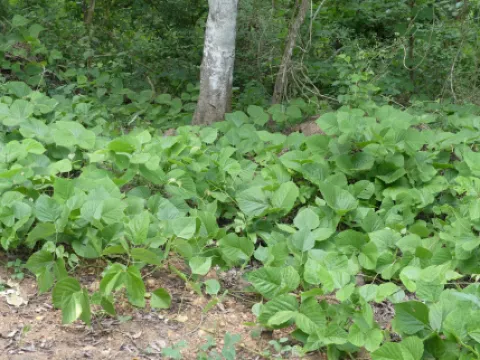
Pueraria tuberosa
Pueraria tuberosa
Pueraria tuberosa is a perennial leguminous climber that propagates via seeds or stem cuttings. In tropical climates, sowing typically occurs at the onset of the monsoon season, providing sufficient moisture for seed germination.
What the section contains
Pueraria tuberosa
For optimal results, seeds should be sown at a depth of 2-3 centimeters in well-tilled, weed-free soil. Ensuring a clean seedbed is vital as young seedlings are susceptible to competition from fast-growing weeds.
Sowing in rows with a spacing of 1 to 1.5 meters is recommended to provide enough space for the plant's vigorous growth and extensive root development as the crop matures.
Pre-treatment of seeds, such as mechanical scarification or soaking, is often employed to break dormancy and ensure uniform emergence of the crop across the entire field.
Regular irrigation is essential during the early establishment phase. Once the root system is established, the plant exhibits remarkable resilience and can tolerate short periods of environmental stress.
This species is highly photophilous and requires full sun exposure to reach its maximum productivity. Shaded environments drastically reduce the accumulation of starch and phytochemicals in the tubers.
Pueraria tuberosa thrives in well-drained, sandy loam soils. Waterlogged conditions must be avoided at all costs, as they trigger root rot and severely damage the plant's yield potential.
The plant adapts well to a range of soil pH levels, although neutral to slightly acidic conditions are preferred. The addition of organic matter to the soil significantly boosts vegetative biomass production.
Temperature is the primary limiting factor for cultivation. As a tropical plant, it is frost-sensitive; therefore, outdoor cultivation is restricted to warm climates, while temperate regions require controlled-environment agriculture.
High relative humidity and consistent moisture levels contribute to rapid vine growth. However, the plant's tuberous roots serve as specialized storage organs, allowing it to survive occasional dry spells without permanent injury.
The economic value of Pueraria tuberosa lies primarily in its large tuberous roots, which are harvested for starch and various medicinal compounds. Yield increases significantly as the plant ages, with mature tubers often weighing several kilograms.
Beyond the roots, the plant produces substantial amounts of leafy biomass. This material serves as a highly nutritious fodder for livestock, making it a valuable intercropping or secondary crop in rural farming systems.
As a legume, it contributes to soil fertility by fixing atmospheric nitrogen, a process that improves the nutrient profile of the soil for subsequent crops in a rotation cycle.
Harvesting strategies involve managing the vegetative regrowth. With proper moisture management, several cuttings of green biomass can be obtained within a single growing season without harming the tubers.
The overall productivity is defined by the plant's ability to allocate nutrients into storage roots. Optimized agricultural practices can maximize these yields, ensuring high-quality raw materials for industrial processing.
Fungal diseases are the most significant threat to Pueraria tuberosa, particularly in humid, poorly ventilated conditions. Phytophthora and powdery mildew are common pathogens that can devastate the foliage.
Root rot caused by persistent soil saturation remains a major concern for agronomists. Maintaining adequate drainage and choosing appropriate planting sites are the most effective preventative measures against these issues.
Insect pests, including various leaf-eating beetles, can cause extensive defoliation, which stunts growth and reduces photosynthetic efficiency. Monitoring programs and integrated pest management are crucial for healthy crops.
Weed management is not only about competition for nutrients; it is also about preventing the spread of viral diseases that can be transmitted by insect vectors found in weed species.
The use of healthy, treated planting stock is the foundation of disease management. By prioritizing phytosanitary standards during the planting phase, farmers can avoid massive outbreaks and maintain crop longevity.
The harvest of tuberous roots is conducted at the end of the dry season when the vine leaves start to yellow and die back. This indicates that the plant has stored maximum energy in its roots.
Mechanical harvesting equipment is used to carefully extract the tubers from the soil. Minimizing physical damage to the tubers during extraction is critical for preventing decay during storage and transport.
Once harvested, the tubers must be thoroughly washed, cleaned of soil, and sorted by size. Rapid dehydration or sun-drying is necessary to prevent microbial contamination and spoilage of the harvested material.
When harvesting the forage biomass, cutting should occur during the flowering stage to ensure the highest protein content. The harvested material is then either processed immediately or preserved as hay.
Proper storage facilities with low humidity and high ventilation are required to maintain the quality of the roots. Effective post-harvest management ensures that the crop maintains its industrial value until it reaches the end-user.