
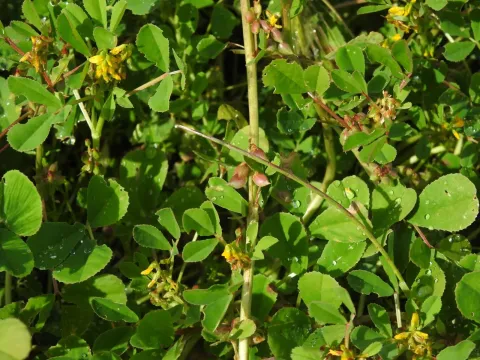
Melilotus messanensis
Melilotus messanensis
Melilotus messanensis is an annual legume species that requires precise management during the sowing phase to ensure optimal establishment. It is best sown in early spring, allowing the plants to take advantage of available soil moisture for rapid germination and early growth.
What the section contains
Melilotus messanensis
The seeds possess a hard coat, which can lead to staggered germination. To maximize the stand uniformity, mechanical scarification is highly recommended prior to planting to ensure water imbibition and consistent sprouting across the field.
The optimal seeding depth is shallow, typically between 1 and 3 centimeters. Placing the seed at this depth ensures that the seedling can emerge quickly without depleting its energy reserves, while also ensuring the seed is well-seated in the soil matrix.
A firm, weed-free seedbed is essential for this crop. After sowing, using a roller to press the seeds into the soil is a best practice, as it enhances the capillary action of soil moisture toward the seeds, which is crucial in drier springs.
Seeding rates should be adjusted based on the intended end-use of the biomass. If the crop is intended for high-density green manure, higher seeding rates are appropriate, whereas lower rates are sufficient for forage production or seed multiplication.
This species is highly regarded for its ability to thrive in diverse soil conditions, including those that are moderately saline or alkaline. Its root architecture allows it to access deeper soil moisture, providing a degree of drought tolerance that is valuable in modern agriculture.
The crop performs best in well-drained soils and does not tolerate waterlogging. Exposure to full sunlight is essential for vigorous development and the efficient process of nitrogen fixation through symbiotic rhizobia associated with its root system.
Temperature requirements are quite flexible; Melilotus messanensis adapts well to temperate and Mediterranean climates. It can withstand cooler spring temperatures during the early stages of development, showing robust early-season growth.
As a legume, it contributes significantly to soil fertility by fixing atmospheric nitrogen. It requires minimal nitrogen fertilization, focusing instead on phosphate and potassium availability, which supports overall plant vigor and seed production.
While the plant is hardy, it is sensitive to competition from aggressive weeds during the first month after emergence. Proper site selection and initial soil preparation are key to giving the crop an advantage over competing weed species.
Fungal pathogens such as powdery mildew represent the primary disease risk for Melilotus messanensis, particularly during periods of high humidity or in dense, poorly ventilated plant stands. These pathogens reduce the photosynthetic capacity and nutritional value of the foliage.
Insect pests, notably root-feeding weevils and aphids, can cause economic damage. Weevils specifically target the nodules, undermining the plant's ability to fix nitrogen, while aphids feed on the stems and leaves, potentially spreading secondary viral infections.
Integrated pest management (IPM) is the most effective approach. This includes a strict crop rotation schedule, avoiding consecutive years of legume planting, and ensuring that fields are kept clean of alternate host weeds that may harbor these pests.
Chemical control should be considered a last resort, utilized only when pest populations exceed economic injury thresholds. When using insecticides, preference should be given to products that are safe for beneficial pollinators, which are vital for seed yield.
Field scouting should be prioritized during the flowering stage, as this is when the plants are most vulnerable to aphid outbreaks and when pollination success directly influences the yield of the subsequent generation.