
Mexican senna
Senna mexicana
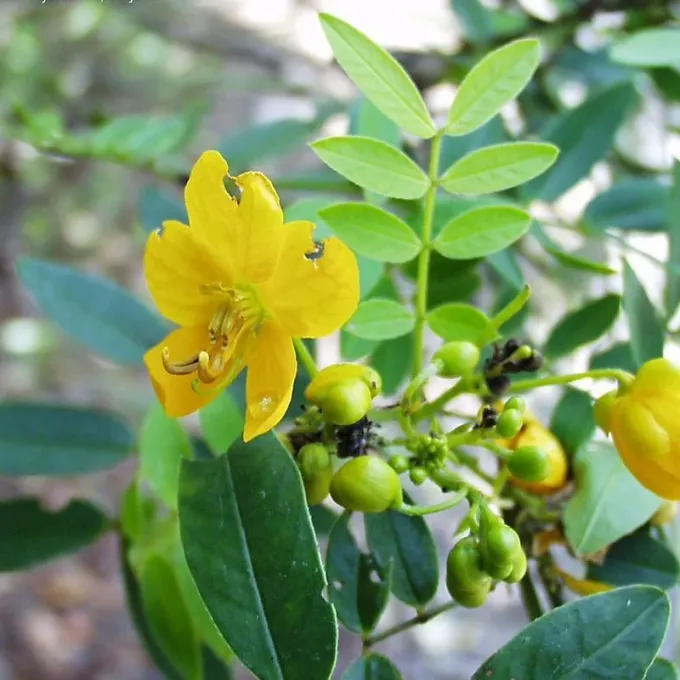
Description
Growing requirements
Mexican senna (Senna mexicana) is a perennial shrub or small tree belonging to the Fabaceae family. Native to parts of North and Central America, this plant is well-adapted to warm, frost-free climates and thrives in arid to semi-humid environments.
The plant requires well-drained, fertile soil to ensure optimal development. While it demonstrates resilience to heat, it performs best in soils where root aeration is maintained, avoiding the waterlogged conditions that can cause fatal root rot.
Light intensity is a critical factor for Senna mexicana, which requires full sun exposure throughout the day. Sufficient solar radiation is not only vital for photosynthesis but also plays a key role in the chemical composition of its foliage.
In terms of temperature, the plant is intolerant of freezing conditions. It thrives in temperature ranges between 22°C and 30°C. Long-term exposure to cold temperatures will cause tissue damage and significantly hinder the plant's ability to produce new growth.
Agronomic management includes regular weeding and potential mulching to retain soil moisture during peak growth stages. Consistent irrigation is essential in semi-arid cultivation areas to maximize the biomass yield of the plants.
Main diseases and pests
Root rot is the most significant disease affecting Senna mexicana, primarily triggered by excessive soil moisture and poor drainage. Management involves careful irrigation scheduling and selecting sites with appropriate topographical features.
Pests such as spider mites, aphids, and various leaf-chewing insects can cause economic damage. Infestations are particularly problematic during hot, dry spells when the plant is already under physiological stress from the heat.
Integrated pest management (IPM) strategies are highly recommended to protect the crop. These include the use of beneficial insects, biological sprays, and maintaining healthy soil conditions to strengthen the plant's natural immunity.
- Monitor fields for early signs of foliage discoloration.
- Ensure adequate spacing between plants to prevent fungal spread.
- Remove and destroy severely infected plant material immediately.
Viral pathogens, though less common, can be introduced by insect vectors. Therefore, controlling insect populations and maintaining field hygiene are essential components of a successful agricultural program for this species.