
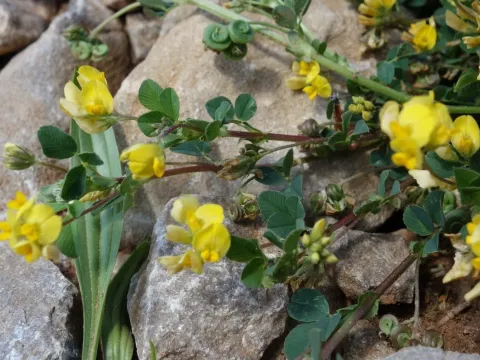
Medicago suffruticosa
Medicago suffruticosa
Medicago suffruticosa, commonly known as shrubby medic, is a perennial plant belonging to the Fabaceae family. It is characterized by its sub-shrub growth habit, which provides structural resilience in the challenging environments where it naturally thrives.
What the section contains
Medicago suffruticosa
The native range of this species is centered in the mountainous regions of Southern Europe, particularly the Pyrenees. It has evolved to survive in rocky terrain, displaying remarkable adaptation to thin soils and high-altitude climatic stresses that would limit other species.
Successful establishment of this crop requires sites with excellent drainage. The plant is noted for its high drought tolerance, making it an excellent candidate for reclamation projects and forage production in arid or semi-arid climatic zones.
The species flourishes in calcareous soils with a neutral to alkaline pH level. Its ability to fix atmospheric nitrogen via symbiotic bacteria enhances soil fertility, effectively contributing to the sustainability of the surrounding agricultural ecosystem.
Economically, this plant is primarily utilized for erosion control on slopes and as a high-quality forage source. Its nutritional profile makes it particularly suitable for small ruminant production in rugged mountain pasture systems.
The most significant threat to Medicago suffruticosa is the incidence of root rot diseases, often exacerbated by waterlogged soil conditions. Poor aeration limits oxygen availability to the roots, rendering the plant susceptible to soil-borne pathogens.
Insect pests, including various species of weevils (Curculionidae), pose a constant threat to foliage and root health. These insects can reduce plant vigor, particularly during the early vegetative stages when the crop is most vulnerable.
Effective management strategies emphasize prevention through proper site selection and soil management. Avoiding compaction and ensuring adequate soil porosity are critical steps to preventing the spread of fungal infections in the pasture.
Weed competition is a limiting factor, especially during the initial establishment year. Integrated pest management, focusing on selective grazing and mechanical weeding, helps maintain the dominance of the legume within the canopy.
Regular monitoring for aphid infestations is also recommended, as these pests can transmit viral diseases that weaken the long-term productivity of the stand. Early detection is essential for maintaining a healthy and persistent forage crop.