
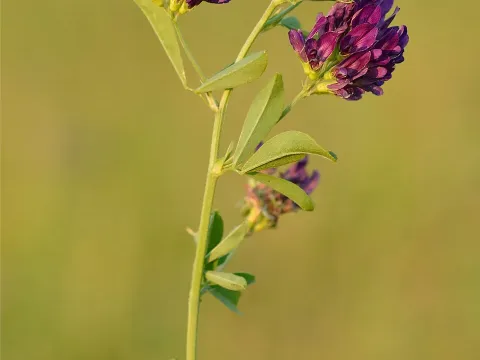
Medicago tenoreana
Medicago tenoreana
Medicago tenoreana is a perennial herbaceous plant belonging to the Fabaceae family. It is recognized for its adaptation to Mediterranean climates, thriving in diverse environmental conditions typical of this region.
What the section contains
Medicago tenoreana
The sowing process is ideally scheduled for early spring, allowing the seeds to take advantage of the warming soil temperatures. Proper soil moisture is critical during the initial germination phase to ensure uniform stand establishment.
When preparing the field, it is essential to create a fine and firm seedbed. Seeding should be performed at a shallow depth, typically 1 to 2 centimeters, which facilitates optimal germination and early root development.
For uniform plant distribution, drilling methods are preferred over broadcasting. After seeding, compacting the soil helps to establish excellent seed-to-soil contact, reducing the risk of moisture loss near the surface.
Depending on the climatic zone, autumn seeding may also be considered in regions with mild winters. This approach helps the crop establish a stronger root system before the onset of the heat of summer.
This crop has a high demand for solar radiation, requiring full exposure to light to maximize vegetative growth. It is well-suited for calcareous soils and performs best where drainage is efficient and aeration is high.
Optimal growth occurs in soils with a neutral to slightly alkaline pH. If the soil is acidic, remediation through liming is necessary to ensure the effectiveness of nitrogen-fixing bacteria within the root nodules.
Medicago tenoreana exhibits notable drought tolerance once established, owing to its deep taproot system. However, for consistent forage yield, supplemental irrigation may be required during prolonged dry periods.
Fertilization management should focus on supplying adequate phosphorus and potassium. These nutrients are vital for enhancing the plant's structural integrity and its ability to withstand seasonal environmental stress.
Proper weed management is essential during the early establishment phase to avoid competition for water and nutrients. Cultivation between rows is often practiced to promote better aeration and soil health.
Root rot remains the most significant threat to the health of the crop, especially in poorly drained soils. Improving drainage is the most effective cultural strategy to mitigate the risk of these soil-borne pathogens.
Pest populations such as weevils can cause substantial damage to the leaves and developing buds. Regular field scouting is necessary to identify outbreaks and implement timely integrated pest management solutions.
Fungal issues, including powdery mildew, may emerge in humid conditions. Managing plant density and ensuring good airflow within the canopy are effective ways to reduce the incidence of such diseases.
Aphid infestations can weaken the plants and lead to the transmission of viral diseases. Monitoring is crucial, and biological controls should be prioritized where appropriate to maintain a healthy ecosystem.
Maintaining a structured crop rotation cycle is essential to prevent the buildup of soil-borne pathogens. Avoiding back-to-back planting with other legumes helps to maintain long-term crop vigor and field productivity.