
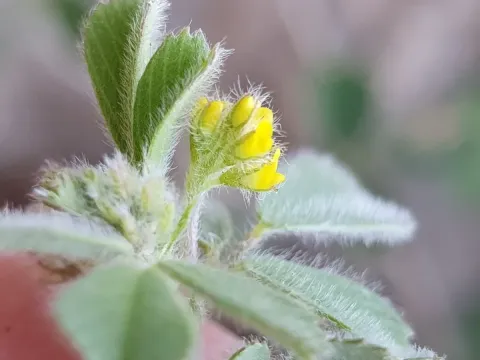
Medicago secundiflora
Medicago secundiflora
Medicago secundiflora is a resilient member of the Fabaceae family, recognized for its value in forage production and its contribution to soil nitrogen enrichment.
What the section contains
Medicago secundiflora
Sowing should take place in early spring, ensuring the seedbed is well-prepared and free of perennial weeds that could compete with young seedlings.
It is recommended to use specialized grain drills to achieve a uniform seeding depth of approximately 1.5 to 2.5 centimeters for optimal germination.
Inoculation with specific Rhizobium bacteria is a crucial step to ensure effective nitrogen fixation from the very beginning of the plant's growth.
The seeding rate should be carefully managed based on seed quality and soil texture to achieve a stand density that prevents both overcrowding and sparse growth.
The plant thrives in well-drained, fertile soils with a neutral pH, demonstrating an ability to withstand brief periods of drought once established.
Climate adaptability is one of its strengths, as it performs well in temperate zones provided it receives adequate sunshine during the main growing season.
Consistent management of soil fertility, particularly phosphorus and potassium levels, is essential to sustain long-term yields and plant health.
Poorly drained or waterlogged soils are detrimental to the root system and should be avoided or improved through drainage systems before cultivation.
Regular maintenance of the fields, including weed control in the first year, is vital for the establishment of a robust and productive alfalfa stand.
Fungal infections, particularly leaf spot diseases, can become problematic during periods of high humidity and poor air circulation within the canopy.
Common agricultural pests such as aphids and weevils pose a significant risk, potentially causing severe damage to leaves and reproductive buds.
Strategic crop rotation is the most effective way to prevent the buildup of soil-borne pathogens and to maintain soil structure over multiple seasons.
Integrated pest management (IPM) practices should be employed to balance the need for control with the preservation of local beneficial insect populations.
Early detection through scouting remains the primary line of defense against both biotic and abiotic stresses that threaten the overall field performance.