
Mexican bird of paradise
Caesalpinia mexicana
Description
Growing requirements
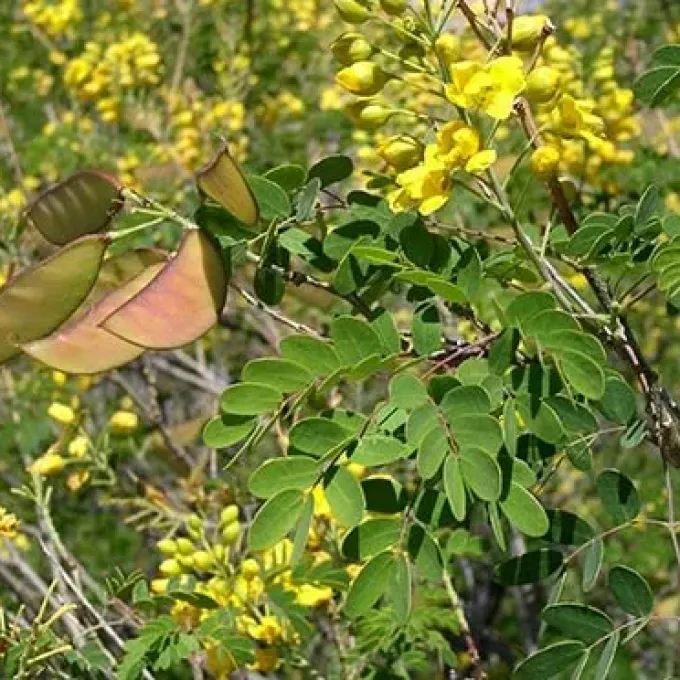
Mexican bird of paradise (Caesalpinia mexicana) is a deciduous shrub or small tree belonging to the Fabaceae family. Native to the dry regions of Mexico and Texas, it has evolved to thrive in environments with intense solar radiation and minimal rainfall.
The plant is widely recognized for its stunning bright yellow flowers that bloom periodically throughout the warmer months. Its foliage consists of delicate, fern-like bipinnate leaves that provide a light, airy appearance to any garden setting.
For optimal growth, this species requires a location with full sun exposure and excellent soil drainage. It is highly drought-tolerant once established, making it a sustainable choice for xeriscape projects in arid and semi-arid climates.
Regarding soil requirements, it adapts well to various soil types, including sandy and rocky ground, as long as there is no standing water. It prefers a neutral to slightly alkaline pH, which is typical for many arid-zone soils.
In landscaping, it serves as a focal point, hedge, or ornamental screen. Beyond its aesthetic value, it acts as a valuable resource for local pollinators, including bees and butterflies, which are attracted to its abundant nectar supply.
Main diseases and pests
The most significant threat to the Mexican bird of paradise is root rot caused by poor soil drainage and excessive moisture during the dormant season.
Common pests include spider mites and aphids, which may colonize the plant during hot, dry spells or when the plant is under water stress.
Powdery mildew can occasionally appear if the plant is kept in an area with stagnant air and high humidity levels.
Pruning is essential not only for shaping but also to remove diseased or crowded branches, which improves ventilation and reduces pest nesting sites.
Implementing a proper irrigation schedule is key to minimizing stress and maintaining the natural defense mechanisms of the shrub against common ailments.