
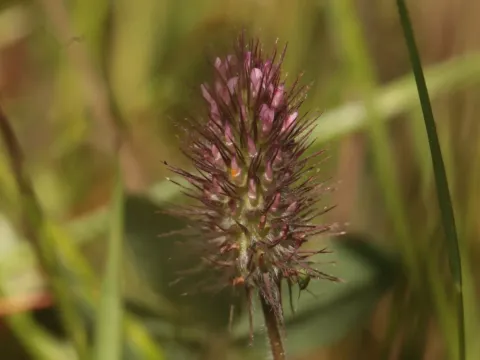
Ligurian clover
Trifolium ligusticum
Ligurian clover is an annual legume that typically requires spring sowing once soil temperatures stabilize above 10 degrees Celsius. This timing ensures steady germination and reduces the risk of loss due to late frost events common in many regions.
What the section contains
Ligurian clover
For efficient field establishment, rows should be spaced evenly using conventional grain drills. Because the seeds are small, sowing depth must be strictly controlled, ideally kept between 1 and 2 centimeters to prevent seed failure from deep burial.
Preparation of the seedbed is essential for this crop, requiring a fine, firm surface to maximize soil-to-seed contact. Proper consolidation of the topsoil layer helps retain moisture near the seeds, which is vital for the initial phase of germination.
In regions with milder climates, autumnal or late-winter sowing may be explored to take advantage of natural rainfall patterns. This allows the plant to develop a robust root system before the onset of the summer heat.
After seeding, light rolling is recommended to ensure the soil is packed appropriately around the seeds. This technique prevents the soil from drying out too quickly and aids in uniform emergence across the entire field.
Ligurian clover is a Mediterranean species that thrives in full sunlight. It is specifically adapted to environments with bright light conditions, which are necessary to maximize its photosynthetic efficiency and forage production.
The plant demonstrates significant tolerance to various soil types, including those with low fertility. It performs exceptionally well in light sandy or loamy soils, where its ability to fix nitrogen becomes a key asset for overall soil health improvement.
Soil pH levels should be maintained in the neutral to slightly acidic range for optimal growth. If the soil is excessively acidic, liming is recommended to ensure that essential minerals remain bioavailable to the plant roots.
As a member of the Fabaceae family, it plays a vital role in sustainable crop rotation systems. By breaking the cycle of cereal-based farming, this clover acts as a natural soil conditioner, leaving significant nitrogen residues for subsequent crops.
The species prefers well-drained soils and does not tolerate long-term waterlogging. In areas with high rainfall, choosing fields with a natural slope or advanced drainage systems is crucial for maintaining a healthy and productive stand.
Fungal diseases, particularly leaf spot and powdery mildew, are the most frequent threats to Ligurian clover. These issues are most severe during periods of high humidity and poor field aeration, necessitating careful management of planting density.
Insect pests such as clover root curculio can significantly damage the subterranean parts of the plant. Monitoring for early signs of herbivory is necessary to avoid stunted growth and reduced yields in the affected sections of the field.
Aphids are another concern, as they can weaken the plant by feeding on sap and potentially spreading viral infections. Controlling their population early in the season is critical to maintaining the plant's vigor throughout the summer months.
Integrated pest management strategies should be applied to manage these risks effectively. Crop rotation remains the most effective tool to prevent the build-up of soil-borne pathogens and pests specific to leguminous plants.
Maintaining high plant health through balanced nutrient management and avoiding excessive fertilization is also key. Healthy plants are better equipped to resist infections and recover from minor pest damage without the need for intensive chemical use.