
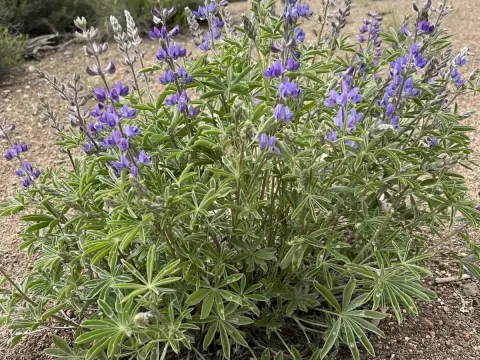
Tailcup lupine
Lupinus caudatus
Tailcup lupine is a perennial legume species native to the western United States, specifically thriving in rocky slopes and mountain meadows. It is scientifically known as Lupinus caudatus and is recognized for its adaptation to challenging environments.
What the section contains
Tailcup lupine
Seeding is typically performed in early spring as soon as the soil can be worked. Due to the hard seed coat, pre-sowing treatments such as scarification are often recommended to ensure uniform germination rates across the field.
The plant develops a deep taproot, which is a key biological adaptation allowing it to access moisture and nutrients deep within the soil profile. This feature makes it highly resilient during periods of drought and environmental stress.
Row spacing should be carefully managed to ensure adequate airflow, which is critical for reducing humidity levels around the foliage. Proper planting density helps optimize the development of lateral shoots and overall canopy density.
Since the initial growth stage is relatively slow, controlling weed populations during the first few weeks after emergence is vital for successful establishment. Once established, the plant becomes highly competitive against surrounding vegetation.
This species requires well-drained, sandy-loam soils to prevent root rot. It is sensitive to waterlogged conditions, which inhibit the symbiotic activity of nitrogen-fixing bacteria residing in its root nodules.
The ideal pH range for growth is slightly acidic to neutral. In highly alkaline soils, the plants may exhibit iron chlorosis, which can be mitigated through appropriate soil amendments or the selection of adapted seed varieties.
Tailcup lupine is sun-loving and performs best in open, well-lit environments. Insufficient sunlight results in spindly growth and lower seed yields, highlighting the importance of site selection in commercial agricultural settings.
Temperature tolerance is a hallmark of this species, as it is native to high-altitude regions. It prefers cool to moderate growing conditions, making it suitable for areas where temperature fluctuations are common during the season.
Soil fertility management relies heavily on the plant's ability to fix nitrogen. Under poor soil conditions, supplementary phosphorus and potassium applications can significantly boost the production of biomass and yield.
The biomass yield of Lupinus caudatus varies depending on soil depth and rainfall distribution during the peak growing phase. In optimal conditions, it serves as an excellent green manure, significantly increasing organic matter content.
Seed production is generally stable, provided that pollination occurs successfully. The plant is highly attractive to bees and other pollinators, which play a crucial role in ensuring a high percentage of pod set.
In terms of forage potential, it provides a high-protein feed source. However, caution must be exercised regarding alkaloid content, as some wild lupine species can be toxic to livestock if consumed in large quantities without proper processing.
Harvesting for seed should occur when the pods turn brown and begin to dry naturally on the stalks. Timely harvesting is essential to prevent seed shattering, which can lead to significant yield losses in the field.
Yield consistency is achieved through a multi-year management plan, focusing on soil health and the maintenance of a healthy microbial community in the rhizosphere. High yields are typically observed in the second and third years of growth.
Root-rot pathogens, particularly Fusarium species, are the primary disease threats in heavy or poorly drained soils. These pathogens can rapidly decimate a stand if climatic conditions are overly humid.
Pests such as the lupine aphid can cause significant damage by feeding on young tissues and transmitting viral diseases. Integrated pest management strategies, including the use of beneficial predatory insects, are highly recommended.
Lupine weevils represent a major risk during the seed maturation phase. These insects bore into the pods, damaging the developing seeds and leading to substantial reductions in harvestable grain quality.
Anthracnose, characterized by dark sunken lesions on stems, can spread rapidly in dense, poorly ventilated stands. Regular scouting and immediate removal of affected plants can help contain the spread of this fungal disease.
Preventative measures, including crop rotation and the use of certified, clean seed, form the backbone of a successful protection program. These practices minimize the dependency on chemical fungicides and insecticides.
Harvesting for forage is performed before the plants reach full seed maturity to ensure maximum protein content and digestibility. Cutting should be done when the plants are at the early flowering stage for best results.
Seed harvesting requires specialized equipment to prevent excessive mechanical damage to the seeds. The moisture content of the seeds at the time of harvest must be carefully monitored to ensure long-term storage stability.
After harvesting, the crop residue serves as an excellent source of organic nitrogen for the following season. Incorporation of the stubble into the topsoil completes the cycle, enriching the field for subsequent cereal crops.
Storage of the harvested material must be in a cool, dry environment to prevent the development of mycotoxins. Proper drying techniques are essential to maintain the structural integrity and quality of the seeds.
Modern harvest techniques utilize combine harvesters with adjusted cylinder speeds to ensure delicate handling of the seeds. Careful calibration of machinery is required to balance efficiency with minimal post-harvest wastage.