
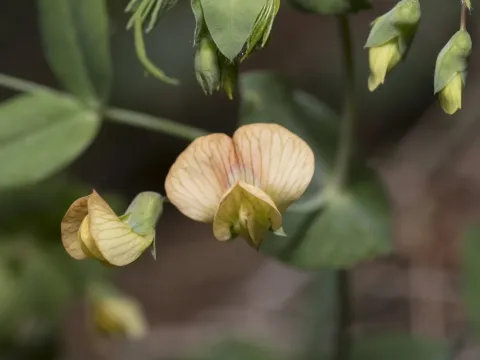
Tawny pea
Pisum fulvum
The tawny pea (Pisum fulvum) is a wild legume species belonging to the Fabaceae family. It serves as a significant genetic reservoir, closely related to the common garden pea, and is known for its remarkable resilience in harsh environments.
What the section contains
Tawny pea
The species is native to the Middle East, specifically regions such as Israel, Jordan, and Lebanon. It typically thrives in Mediterranean climates characterized by hot, dry summers and cool, wet winters, often growing on rocky or calcareous soils.
Botanically, it is distinguished by its small, tawny-colored seeds and slender, climbing stems. The plant exhibits typical features of the genus Pisum, including compound leaves ending in tendrils, but it is much more adapted to water-scarce conditions than modern cultivars.
Regarding soil requirements, this species favors well-drained, alkaline environments. It has evolved to survive in habitats with low nutrient availability, utilizing its deep root system to access deep water reservoirs and minerals.
The primary agricultural utility of Pisum fulvum is its role in crop breeding programs. Researchers utilize its genetic material to introduce traits like drought tolerance and disease resistance into high-yielding commercial pea varieties.
As a wild species, the tawny pea possesses a high level of natural resistance to several pathogens that typically plague cultivated peas, including various fungal blights and root-rot complexes.
However, like most legumes, it remains susceptible to environmental stressors such as excessive moisture, which can facilitate the growth of opportunistic fungi during the early stages of development.
Common agricultural pests, including the pea weevil and various aphids, can threaten seed production and foliage health, often causing significant damage to wild populations.
Habitat loss and overgrazing represent the most severe threats to the persistence of natural stands of this species, prompting concerns about the conservation of its unique genetic diversity.
Conservation strategies currently focus on collecting and storing germplasm in seed banks, rather than conventional pest management, to ensure the long-term availability of its genetic traits for future agricultural needs.