
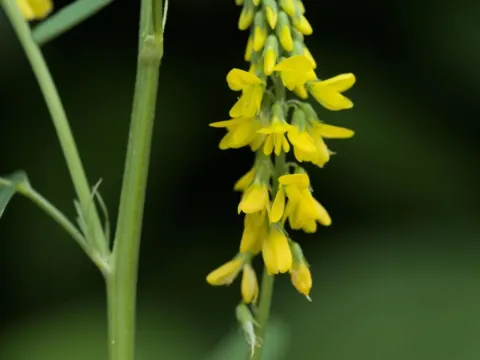
Tall melilot
Melilotus altissimus
Tall melilot (Melilotus altissimus) is a biennial legume species that is highly valued for its adaptability. The optimal sowing time is typically early spring, as soon as the soil can be worked, to ensure the seeds utilize the available moisture for germination.
What the section contains
Tall melilot
The seeds of this species possess a hard seed coat, which necessitates mechanical or chemical scarification prior to planting. This process significantly improves the uniformity of emergence and increases the final stand density in the field.
Standard drill seeding is the most common method of establishment. A seeding depth of 1-2 centimeters is recommended, as deeper placement can hinder the emergence of small seedlings, particularly in heavier soil types.
Tall melilot is often sown as an understory crop with small grains. This practice maximizes land use efficiency, allowing the legume to establish its root system while the primary cereal crop matures above it.
Post-seeding rolling is a critical step in the agronomic process. It ensures the seeds have adequate contact with the soil, promoting efficient water uptake and preventing the soil from drying out around the germinating seeds.
##requirements##This crop is known for its high environmental plasticity, thriving in a wide range of climatic conditions. It exhibits excellent cold tolerance, making it suitable for temperate regions where other legumes might struggle to survive winter.
Tall melilot is not particularly demanding regarding soil fertility; however, it performs best on neutral to slightly alkaline soils. It is particularly noted for its ability to grow on saline or limestone-rich soils where other crops typically fail.
The plant is sensitive to acidic and waterlogged conditions. Proper drainage and soil liming are essential for successful cultivation, as excess moisture often leads to root rot and poor nodulation of the symbiotic nitrogen-fixing bacteria.
As a light-loving species, tall melilot requires ample exposure to sunlight. Excessive shading by weeds or dense canopy cover can stunt plant development and reduce the overall accumulation of vegetative biomass.
The symbiotic relationship with specific soil bacteria is the foundation of its nitrogen-fixing ability. Ensuring the presence of these microorganisms in the soil is vital for achieving high forage quality and soil enrichment.
##yield##The yield of tall melilot can reach 4-6 tonnes of dry matter per hectare under favorable management practices. The high productivity in the second year makes it a very efficient source of forage during the late spring period.
The crop is highly valued for its role in sustainable forage production, offering a protein-rich source for livestock. Proper drying and ensiling techniques are important to manage the coumarin content, which gives the plant its characteristic sweet scent.
Tall melilot is also an exceptional honey plant. It is widely recognized in apiculture for its high nectar secretion, providing a critical source of food for bee populations throughout the blooming season.
Its deep, taproot system helps improve soil structure by breaking up compacted horizons and increasing aeration. This deep root growth makes it an excellent plant for green manure, improving the soil for subsequent crops.
By contributing organic matter and nitrogen to the soil, tall melilot functions as an important link in crop rotation, enhancing the sustainability of agricultural systems while reducing the need for synthetic fertilizers.
##threats##Despite its robustness, tall melilot can be susceptible to various fungal diseases, such as powdery mildew and leaf spot. These issues typically emerge during periods of high humidity and when the stand density is too high.
Insect pests, including various types of weevils, can significantly damage the plant's reproductive organs and reduce seed yields. Aphids may also infest the plants, particularly under warm and dry environmental conditions.
Effective management involves consistent crop rotation and the maintenance of adequate spatial separation from older legume stands. Preventive measures, such as weed control along field borders, help reduce the incidence of pest outbreaks.
Integrated Pest Management (IPM) strategies should be prioritized, focusing on monitoring pest population thresholds before implementing any control measures. Biological control agents often play a natural role in regulating pest levels.
Maintaining strong, vigorous crops through correct agronomic practices is the best defense against biotic stresses. Regular monitoring of the field is necessary to identify and treat localized pest or disease outbreaks before they spread.
##harvest##Harvesting for forage or hay should be initiated at the onset of the flowering stage. At this phenological stage, the plant provides the best balance between protein content, digestibility, and biomass yield.
When producing hay, it is essential to handle the crop gently to prevent the loss of leaves, which are the most nutrient-dense part of the plant. Proper conditioning and limited mechanical agitation during the drying process are key.
Seed harvesting requires careful timing to avoid excessive seed shattering. Using a two-stage harvest method—swathing followed by combine threshing—is generally recommended to minimize losses and ensure seed quality.
Post-harvest seed processing should include immediate cleaning and drying to a moisture level below 14%. This ensures the longevity of the seeds during storage and prevents mold and self-heating.
Efficient organization of the harvest schedule is vital to maximize the economic returns from the crop. Whether for feed or seed production, timely execution is the primary factor in securing the crop's quality and yield potential.