
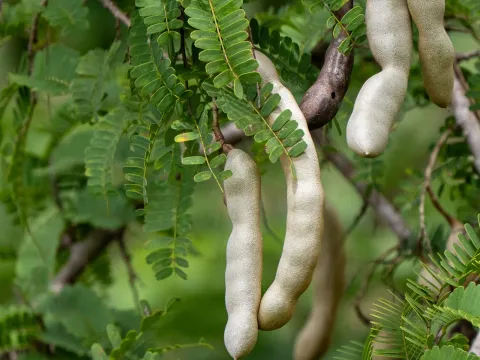
Tamarind
Tamarindus
Tamarind (Tamarindus indica) is a long-lived, evergreen tropical tree belonging to the Fabaceae family. It is renowned for its resilience and adaptability to various tropical climates across Africa and Asia.
What the section contains

Tamarind
The tree requires a hot, semi-arid climate to thrive. While it can withstand periods of drought, it grows best in areas with an annual rainfall of 500 to 1500 mm, provided there is a distinct dry season for ripening.
Soil requirements are relatively modest, though deep, well-drained alluvial or sandy loam soils are preferred. The species is highly sensitive to waterlogging, which necessitates careful site selection for commercial orchards.
Tamarind trees are sensitive to frost and require full sun exposure to maintain optimal photosynthetic activity. Young trees need protection from strong winds until they establish a robust root system.
The tree exhibits a high level of tolerance to saline conditions and poor soil quality, making it an excellent candidate for land reclamation and agroforestry projects in tropical regions.
Tamarind is primarily cultivated for its pods, which contain an edible pulp valued for its unique sweet-sour flavor. The pulp is a staple ingredient in various global cuisines, especially in Southeast Asia and India.
Productivity varies based on the cultivar and environmental conditions. A healthy mature tree can yield approximately 150 to 200 kg of pods annually, reaching peak production levels after its first decade.
- Culinary use: paste, sauces, and snacks.
- Industrial use: seed polysaccharides for textile sizing.
- Medicinal use: high antioxidant content in the fruit pulp.
- Wood use: high-quality timber for furniture and construction.
Pollination is primarily carried out by bees, making the presence of apiaries near plantations a beneficial practice for maximizing fruit set and overall yield.
Proper nutrient management, focusing on phosphorus and potassium, is essential for maintaining consistent annual yields and promoting tree longevity in orchard environments.
Tamarind is generally considered a hardy tree, but it is susceptible to certain pests, such as the tamarind bruchid, which infests the pods and destroys the seeds inside.
Fungal pathogens like powdery mildew and leaf spot diseases can affect the foliage during periods of exceptionally high humidity, potentially reducing the tree's vigor.
Root rot caused by Phytophthora species is a major concern in orchards with poor drainage, which can lead to rapid decline and mortality of mature trees.
Integrated Pest Management (IPM) strategies, including biological control agents and hygienic orchard practices, are recommended to minimize reliance on chemical inputs.
Regular monitoring of the canopy and soil moisture levels remains the most effective prophylactic approach to prevent large-scale pest outbreaks or disease development.