
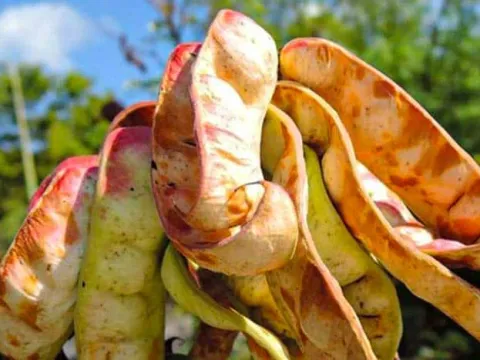
Tara
Tara
Tara is typically propagated through seeds, which require specific preparation before planting to ensure successful germination. The hard seed coat must be scarified to allow water absorption and trigger the metabolic processes within the embryo.
What the section contains

Tara
In their native Andean environment, planting is timed to coincide with the onset of the rainy season to provide natural irrigation during the critical early growth stages. Nursery management is essential for producing healthy seedlings with robust root systems.
When transplanting into the field, a specific spacing pattern is maintained to allow for the tree's eventual spread and to facilitate future maintenance operations. Careful handling of the root ball is vital to avoid transplant shock.
Initial weed control is crucial, as young tara plants are susceptible to competition for light and nutrients from aggressive local flora. Regular monitoring and manual weeding are recommended until the trees reach sufficient height.
Growth rates can be moderate, but once the trees are established, they demonstrate strong resilience and competitive ability in their ecological niche.
Tara belongs to the Fabaceae family and is highly adapted to semi-arid climates with poor, rocky, or sandy soils. It thrives in environments where many other crops would struggle due to water scarcity and nutrient deficiencies.
The plant requires high levels of solar radiation to produce the phytochemicals concentrated in its pods. It prefers well-drained locations and is particularly sensitive to waterlogged conditions, which can lead to root rot.
Altitude plays a significant role in its development, with the most productive stands found in mountainous regions between 1000 and 3000 meters. The species is capable of surviving significant diurnal temperature variations.
As a legume, tara has the capacity to fix nitrogen from the atmosphere through symbiotic associations with soil bacteria. This trait makes it a sustainable crop that can improve soil structure and fertility over time.
Wind protection in the early years of plantation establishment is recommended to prevent structural damage to young, developing stems.
The main commercial yield consists of the dried pods, which are a major source of tannins and gallic acid. Yield potential increases as trees mature, with peak productivity typically reached in the second decade of growth.
Economic interest in tara is driven by its industrial versatility, particularly in the leather tanning industry, where it provides high-quality vegetable tanning agents. These are valued for their environmentally friendly properties.
Furthermore, the endosperm of the tara seed is processed to extract tara gum, a natural thickener used widely in the food, cosmetic, and pharmaceutical industries. This dual-market demand makes the crop highly attractive for agro-business.
Efficient management of plantations allows for a sustainable harvest cycle, contributing to the economic stability of rural farming communities. Proper post-harvest handling is critical to preserving the concentration of active compounds.
- Vegetable tanning for high-end leather
- Food industry additive E417 (Tara gum)
- Cosmetic formulation stabilizer
- Industrial textile dyeing processes
Tara is recognized for its general hardiness, showing resistance to many common agricultural pathogens. However, poor drainage remains the primary threat to the overall health and longevity of the trees.
Pests that specifically target legume pods can impact yield quality if not managed correctly. Integrated pest management (IPM) practices are encouraged to maintain ecological balance and prevent excessive chemical use.
Invasive weeds serve as alternative hosts for pests, making consistent field sanitation a necessary component of the agricultural process. Clean cultivation areas significantly reduce the pressure from various threats.
Pruning should be performed with sanitized tools to prevent the transmission of fungal or bacterial infections. Proper canopy architecture also improves airflow, which mitigates the risk of moisture-related diseases.
Regular field scouting is the best defense against unforeseen outbreaks, allowing farmers to take corrective measures early in the season.
Harvesting tara is a labour-intensive activity that requires the pods to be picked by hand when they reach optimal maturity. This ensures that the chemical concentration of tannins is at its maximum.
The pods are harvested over several weeks as they do not ripen simultaneously on the tree. After gathering, the pods must be dried immediately in thin layers under direct sunlight to inhibit fungal growth.
Once dried, the pods become brittle, facilitating the separation of the seeds from the husk. This process is often mechanized in modern facilities to increase the efficiency of raw material preparation.
Storage of the finished product requires low-humidity environments to prevent moisture absorption, which could degrade the quality of the tannins. Proper ventilation is key to ensuring long-term product integrity.
Efficient logistics from the field to the processing plant are essential to maintaining the high market value of the harvested tara pods.