
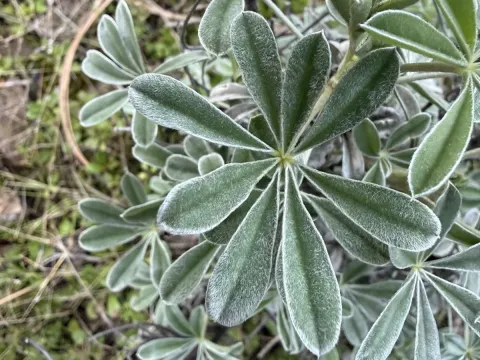
Silver bush lupine
Lupinus albifrons
Silver bush lupine (Lupinus albifrons) belongs to the Fabaceae family and is native to the western regions of North America, particularly California. This hardy perennial subshrub is widely known for its ability to thrive in arid and semi-arid environments.
What the section contains
Silver bush lupine
The plant requires full sun and well-drained, sandy, or rocky soils. It is highly drought-tolerant, largely due to its deep taproot system and the dense silvery hairs on its leaves, which reduce water transpiration under intense sun exposure.
As a legume, it contributes significantly to soil fertility by fixing atmospheric nitrogen through a symbiotic relationship with specific soil bacteria. This makes it an excellent choice for revegetation projects and land restoration.
Optimal growth conditions involve Mediterranean-type climates with distinct dry seasons. The species does not perform well in compacted or waterlogged soils, as excessive moisture leads to rapid decay and root disease.
In addition to its ecological benefits, it is sometimes used for erosion control on slopes. Its maintenance needs are minimal, provided it is planted in an area with excellent drainage and sufficient sunlight.
Root rot, particularly caused by Fusarium species, is the primary threat to Lupinus albifrons. It occurs predominantly in sites with poor drainage or over-irrigation, leading to the collapse of the plant vascular system.
Powdery mildew can affect the foliage during periods of high humidity or poor air circulation. While usually not fatal to established plants, it reduces vigor and can be unsightly, requiring proper spacing to prevent spread.
Insect pests, including various species of aphids and weevils, may feed on the stems, leaves, or roots. Monitoring is essential during the early stages of growth to prevent significant damage to the canopy.
Seed-feeding insects, such as specific fly larvae, can reduce the seed yield if the crop is being grown for propagation. Integrated pest management (IPM) practices are recommended to keep populations below economic injury levels.
Maintaining a clean growing environment and removing infected plant tissue immediately helps limit the spread of pathogens. Good agricultural practices, including crop rotation, are essential for long-term site viability.