
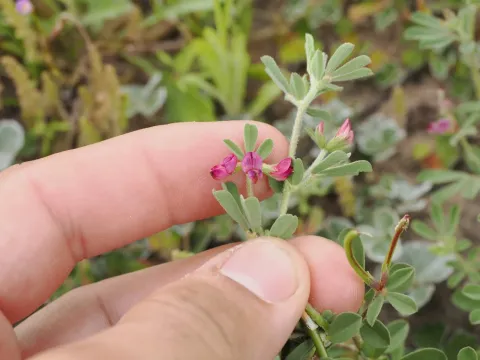
Lotus cruentus
Lotus cruentus
Lotus cruentus is a member of the Fabaceae family, valued for its role as a forage crop. The ideal sowing period is early spring, as soon as the soil warms up to approximately 8–10 degrees Celsius.
What the section contains
Lotus cruentus
Dormant or late-autumn sowing is also viable in temperate regions, allowing the seeds to undergo natural stratification, which often results in more vigorous spring emergence.
Seeds should be sown at a shallow depth of 1.5–2 cm, as they have limited energy reserves to push through thick soil layers.
A seed rate of 8 to 12 kg per hectare is recommended, depending on whether it is sown as a monoculture or within a seed mixture.
Proper seedbed preparation, including fine-tilth cultivation and light rolling, is essential to ensure uniform germination and establishment.
The plant thrives on well-drained, fertile soils but exhibits notable adaptability to various conditions, including clay-heavy and slightly acidic soil profiles.
Lotus cruentus is recognized for its significant drought tolerance, making it a robust option for areas prone to water scarcity or irregular rainfall patterns.
As a light-demanding species, it should not be grown in heavy competition with tall, aggressive grasses that could shade it out during the critical growth stages.
Optimal mineral nutrition involves adequate levels of phosphorus and potassium, which support root system development and efficient biological nitrogen fixation.
The crop is highly frost-hardy, allowing it to survive harsh winter conditions and provide reliable yields in temperate climatic zones.
Green matter yield is heavily influenced by moisture availability and the presence of essential micronutrients, particularly molybdenum, which is vital for nodule development.
With correct agronomic management, this crop can yield two to three cuts per season, significantly boosting the output of hay-producing fields.
The forage quality remains consistently high even if harvesting is slightly delayed, as the stems retain their leaves well into the reproductive stage.
Under grazing systems, Lotus cruentus shows excellent regrowth capacity, provided that a proper rotation cycle is implemented to allow for recovery.
Seed production requires careful monitoring of humidity levels to prevent pod shattering and ensure maximum harvest efficiency.
The most common pathologies affecting this crop include various leaf spots and root rots, which typically flourish in environments with excessive moisture.
Insect pests, including weevils, pose a primary threat by damaging the reproductive organs and potentially reducing seed yield by a significant margin.
Preventative measures such as maintaining field isolation and managing weed populations are critical to limiting the spread of pests and diseases.
Powdery mildew can occur during hot, humid summers; keeping the canopy open and avoiding overly dense plantings helps maintain airflow.
A robust plant health program relies on utilizing disease-free seeds and performing regular scouting to detect infections early in the season.
For high-quality hay, the crop should be harvested at the onset of the flowering stage, which ensures the optimal balance between protein content and fiber.
Rapid drying is recommended post-harvest to preserve the nutrient-dense leaves, which are prone to shedding if subjected to prolonged solar exposure.
When harvesting for seeds, a swathing method is preferred when approximately 70–80% of the pods have darkened, ensuring maturity before threshing.
Specialized harvesting equipment should be calibrated for fine seeds to minimize loss during the threshing process in the field.
Once harvested, the seed must be cleaned and dried to stable moisture content before storage to maintain long-term viability and germination rates.