
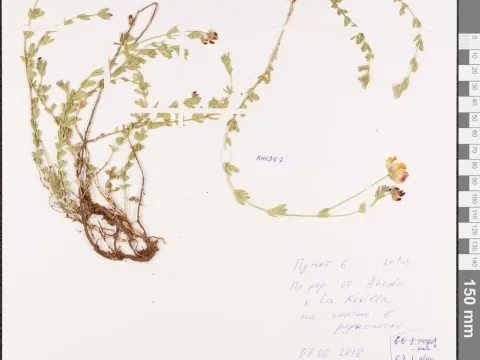
Lotus glareosus
Lotus glareosus
Lotus glareosus is a perennial herbaceous plant belonging to the Fabaceae family. It is a specialized species known for its resilience and ability to thrive in challenging geological conditions, particularly on gravelly and rocky substrates where competition from other vegetation is low.
What the section contains
Lotus glareosus
From a botanical perspective, the plant exhibits a prostrate or ascending growth habit, which protects it from wind exposure in open mountain terrains. Its root system is exceptionally robust, allowing it to tap into deep mineral resources and stabilize loose soils effectively.
The plant's natural range is primarily restricted to mountain regions of Europe. It has evolved to survive in environments with high solar radiation and significant temperature fluctuations, characteristics that make it highly adaptable to harsh agricultural landscapes.
Regarding soil requirements, Lotus glareosus thrives in well-drained, porous environments. It does not require high levels of organic matter initially, as it establishes symbiosis with nitrogen-fixing bacteria, thereby enriching the soil over time and acting as a pioneer species.
Its primary agricultural use involves land reclamation, soil erosion control, and serving as a forage component in low-input farming systems. It is increasingly recognized for its contribution to sustainable agriculture by improving soil fertility without synthetic fertilizers.
The main plant health risks include fungal diseases such as leaf rust and powdery mildew, particularly in humid microclimates. Ensuring proper spacing and airflow within the canopy is the most effective cultural practice for disease prevention.
Pests typically include various species of weevils and aphids that may target the reproductive organs or tender foliage. Management strategies emphasize biological controls and minimizing the use of broad-spectrum pesticides to preserve beneficial insect populations.