
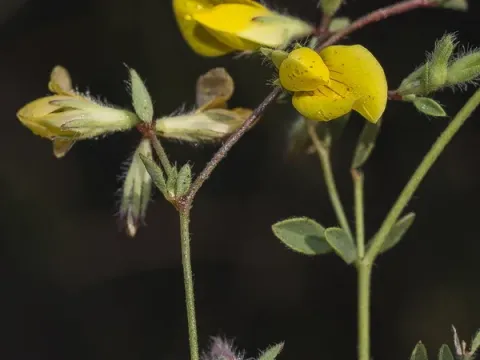
Lotus castellanus
Lotus castellanus
Sowing of Lotus castellanus should be carried out in early spring, when the soil warms up to temperatures between +5 and +8 degrees Celsius. The optimal period for starting field work coincides with the sowing season for early cereal crops.
What the section contains
Lotus castellanus
To ensure uniform germination, seeds require preliminary scarification, as they possess a hard coat that restricts moisture absorption. The sowing depth should be between 1 and 2 centimeters, depending on the soil type and moisture level.
The seeding rate is calculated individually based on the purity of the material and the sowing method: drilling or broadcasting. For pure stands, 8 to 12 kilograms of seeds per hectare is considered optimal.
This crop is highly suitable for creating legume-grass mixtures, where it serves as a long-lived component of the sward. When under-sowing in mixtures, the Lotus castellanus seeding rate is reduced by 30-50% relative to pure stands.
An essential condition for successful establishment is ensuring close contact between the seeds and the soil, which is achieved by mandatory field rolling immediately after completion of sowing.
Lotus castellanus belongs to the Fabaceae family and is valued for its high ecological plasticity, which allows it to adapt to unfavorable growing conditions.
The plant demonstrates excellent resistance to temporary soil waterlogging and the ability to withstand prolonged drought periods due to its well-developed root system.
The crop has moderate requirements for soil composition, growing successfully in both light sandy soils and heavy clay soils with a wide range of acidity levels.
Optimal productivity is achieved when grown in areas with good sunlight, as the plant is heliophilic and sensitive to shading by taller vegetation.
Under conditions of high groundwater, Lotus castellanus outperforms many other legumes, maintaining its nutritional value and biomass throughout the entire growing season.
The yield of green matter from Lotus castellanus depends on the climatic zone, soil fertility levels, and the intensity of the sward management regime throughout the season.
With proper agronomic practices and sufficient rainfall, the crop is capable of providing up to three full harvests per calendar year while maintaining a high regrowth rate.
The nutritional value of the harvest is determined by a high crude protein content, which is essential for a balanced diet for livestock, especially in the dairy industry.
Utilizing the crop for hay allows for the production of high-quality feed, which approaches the digestibility indicators of alfalfa and clover.
While yields vary in natural habitats, proper application of mineral fertilizers, particularly phosphorus and potassium, can lead to a significant increase in biomass production.
The main threats to the stands are associated with fungal diseases, such as powdery mildew and various leaf spots, which occur in conditions of excessive humidity.
Pests, such as clover root weevils and various aphid species, can cause significant damage to young seedlings, significantly reducing plant density during the early development stages.
Weed control in the first year of life is critical, as Lotus castellanus develops relatively slowly at this stage and competes poorly with aggressive weeds.
Disease prevention involves adhering to crop rotation and avoiding over-dense stands, which improves ventilation and reduces the risk of pathogen development.
If pest outbreaks are detected, the application of registered insecticides is recommended, strictly following the environmental safety regulations for agricultural products.
The optimal harvest time for green matter or hay occurs at the beginning of the flowering phase, when the concentration of nutrients in the plant reaches its maximum value.
Delayed mowing reduces feed quality due to stem lignification and a decrease in the proportion of leaves, which negatively affects fiber digestibility for animals.
Modern equipment is used for hay production, ensuring careful mowing and tedding for uniform drying of the mass without losing valuable leaf blades.
When grown for seeds, harvesting is conducted when 70-80% of the pods turn brown, avoiding over-ripening, which can lead to natural shattering and significant crop losses.
Post-harvest processing of seed material includes thorough cleaning and drying, which helps maintain high germination energy for use in subsequent seasons.