
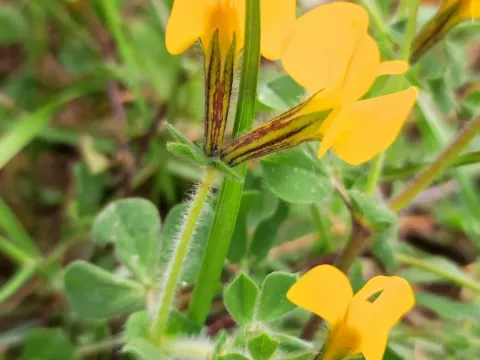
Lotus biflorus
Lotus biflorus
Lotus biflorus is a perennial herb belonging to the Fabaceae family. It is increasingly recognized as a valuable crop for sustainable forage production, particularly in arid and semi-arid agricultural systems.
What the section contains
Lotus biflorus
The optimal sowing time typically falls in early spring, once the soil temperature is stable and sufficiently warm to support germination. Sufficient moisture at the time of sowing is crucial for establishment.
Seeds should be sown at a depth of 1–2 centimeters. Using precise seeding equipment helps ensure uniform seed distribution and proper soil contact, which significantly improves emergence rates.
Proper field preparation is essential, as a clean and well-leveled seedbed promotes uniform growth. Removing competing weeds before or during the initial establishment phase is key to long-term success.
Planting density should be carefully managed based on the intended use, whether for hay production or pasture grazing. High-quality, certified seeds help ensure high field emergence and vigor.
This crop is highly prized for its environmental adaptability, performing well even in rocky or nutrient-poor soils. It is remarkably drought-tolerant, maintaining productivity when other legumes fail.
Lotus biflorus thrives in full sun and is not well-suited for shaded environments. It tolerates slightly saline and alkaline soil conditions, making it useful for reclaiming degraded or marginal farmland.
Its deep root system allows it to access water reserves in deeper soil layers. This characteristic is particularly beneficial for stabilizing forage supply during dry summer seasons.
The plant has a symbiotic relationship with nitrogen-fixing bacteria, allowing it to thrive with minimal nitrogen supplementation. Maintaining adequate phosphorus and potassium levels in the soil is recommended for yield optimization.
Neutral to slightly alkaline pH levels are generally preferred. In highly acidic conditions, the plant may show reduced growth and lower nitrogen-fixation performance, requiring soil amendments.
The primary agricultural utility of Lotus biflorus lies in its production of high-quality hay and its effectiveness as a pasture component. It offers excellent palatability for livestock, including cattle and sheep.
Yield levels depend heavily on moisture availability and appropriate management. In well-managed systems with sufficient irrigation or rainfall, the crop can provide multiple harvests per season.
The plant is known for its strong recovery capacity after grazing or mowing. This attribute is vital for long-term pasture viability and helps maintain consistent forage availability throughout the year.
Nutritionally, it compares favorably to other common forage legumes, with high levels of crude protein and essential minerals. This makes it an ideal component in livestock diets.
Sustainable pasture management, including rotational grazing, helps prolong the life of the stand. Preventing overgrazing is essential for maintaining plant vigor and maximizing total yield over several years.
Common agricultural threats include fungal diseases such as powdery mildew, which are more prevalent in high-humidity conditions. Maintaining proper airflow and monitoring the crop can help mitigate these risks.
Pests, particularly various species of aphids and weevils, may impact crop health during the seedling stage. Implementing integrated pest management strategies is highly effective for long-term control.
Crop rotation is a critical practice for reducing soil-borne pathogens. By breaking the cycle of pests, farmers can maintain healthy stands without excessive chemical intervention.
If chemical controls are necessary, they should be applied only after monitoring confirms that the economic threshold of damage has been reached. Strict adherence to pesticide safety labels is required.
Weed control in the first year of establishment is vital to prevent young plants from being choked out. Mechanical weeding in rows can be an effective alternative to herbicides in integrated systems.
Hay harvest should ideally commence at the early flowering stage to ensure the best balance between dry matter quantity and nutritional quality. Delaying harvest leads to stems becoming overly lignified.
Harvesting techniques include mowing followed by raking for even drying. Careful handling during the drying process is necessary to minimize leaf loss, which is the most protein-rich part of the plant.
For seed production, harvesting is timed according to fruit maturity. Since seeds can shatter easily, combining should occur when the pods start to turn brown, but before they split open in the field.
Post-harvest cleaning is necessary to ensure seed purity and to prepare the grain for storage. Proper drying to a moisture content of 12-14% is essential for maintaining germination capacity.
Storage facilities should be cool, dry, and well-ventilated to protect against moisture-related damage and pests. Properly stored, the seed maintains its viability for several years.