
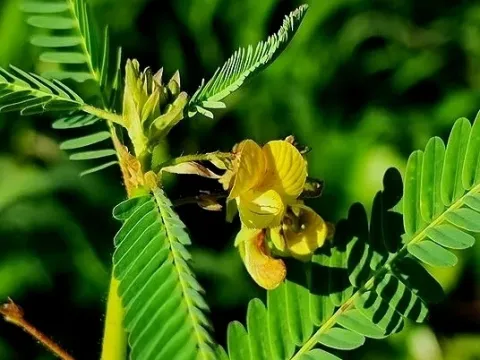
Aeschynomene denticulata
Aeschynomene denticulata
Aeschynomene denticulata is a moisture-loving crop, so sowing dates are tied to the onset of the rainy season or the flooding period of rice paddies. The optimal time for sowing is when the soil temperature reaches 20–25 degrees Celsius.
What the section contains
Aeschynomene denticulata
The seeds of this crop have a hard coat, requiring scarification or soaking before sowing to improve germination rates. Sowing is carried out directly into moistened substrate or water at a depth of up to 2-3 centimeters.
In tropical climates, sowing can be done in several stages if the soil remains sufficiently moist throughout the growing season. It is important to ensure a stable temperature regime without sharp fluctuations.
The planting density depends directly on the cultivation goals — it can be higher for green mass production, while seed plots require thinning for better aeration. The crop shows active growth under high sunlight.
After germination, seedlings quickly adapt to the aquatic environment, forming adventitious roots on the submerged parts of the stem. This allows the plant to effectively compete with weeds in rice field conditions.
Aeschynomene denticulata is a typical legume family member capable of nitrogen fixation. The plant prefers well-lit areas with high soil moisture levels.
Successful growth requires alluvial or silty soils; it is often found in areas with excessive waterlogging. The crop is highly demanding regarding the availability of free nitrogen in the soil or symbiosis with nodule bacteria.
The optimal temperature range for vegetation is between 22 and 30 degrees Celsius. The plant has high tolerance to flooding, which sets it apart from many other agricultural legumes.
Soil pH should be in the range from slightly acidic to neutral. High organic content in the substrate significantly accelerates the development of vegetative mass.
Agronomic practices include maintaining water levels if the crop is grown as a companion to rice. Additional application of phosphorus and potassium fertilizers is necessary to maintain yield on depleted soils.
The main danger to the crop is fungal diseases that develop under high humidity conditions. Powdery mildew and various types of leaf spots can affect plantings during dense growth.
Pests such as weevils or lepidopteran larvae can damage the leaf apparatus and young shoots. Regular monitoring of the plantings allows for suppressing insect spread at early stages.
Nematodes affecting the root system in flooded conditions can become a serious obstacle to normal plant development. Prevention includes crop rotation and the use of resistant variety populations.
Bacterial wilt is a rare but dangerous ailment that can lead to complete loss of the crop. Affected specimens should be immediately removed from the plot to prevent the spread of infection.
Weed vegetation, especially fast-growing hydrophytes, requires control in the initial stages of crop growth. Mechanical weeding or water level regulation effectively restrains competitor development.
Green mass harvesting is carried out during the flowering phase, when the concentration of nutrients in the stems reaches its maximum. At this time, the plant is maximally enriched with protein.
If seeds need to be obtained, harvesting is performed after the pods darken. It is important to avoid over-ripening, as pod splitting leads to significant loss of planting material.
Mechanized harvesting is possible using special headers adapted for work on waterlogged soils. In small farms, manual collection is preferred.
Post-harvest processing includes drying raw materials in shaded areas to preserve protein quality. Improper drying in direct sunlight can lead to the loss of valuable amino acids.
Seed storage requires maintaining low humidity and cool temperatures to preserve viability until the next sowing season. Airtight containers prevent damage by pests.