
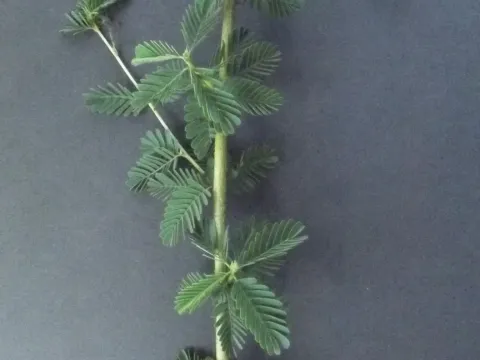
Aeschynomene abyssinica
Aeschynomene abyssinica
Aeschynomene abyssinica is a heat-loving perennial herbaceous plant, meaning that its sowing dates are closely tied to the onset of the rainy season in its natural range.
What the section contains
Aeschynomene abyssinica
The optimal time for sowing seeds occurs when steady air temperatures exceed 20-25 degrees Celsius and the soil is sufficiently warm and moist.
In sub-equatorial climates, seeds are sown immediately after the first significant rains to ensure that seedlings receive enough moisture during the early growth stages.
The seeding method often involves broadcasting the seeds across the surface, followed by light incorporation into the soil, as they are sensitive to planting depth.
Pre-sowing seed treatment, including scarification, significantly increases germination rates, as the hard coat of the Aeschynomene seeds can prevent rapid sprouting.
This crop belongs to the Fabaceae family and has specific growth requirements typical of the tropical zones of East Africa.
Aeschynomene abyssinica prefers moist habitats and can tolerate temporary soil waterlogging, making it suitable for areas with poor drainage.
The plant adapts well to various soil types, but it shows the best growth performance in loamy and clay substrates with sufficient organic content.
A critical factor for normal development is the availability of sunlight, as the crop performs very poorly under heavy shade during the growing season.
The plant exhibits high plasticity regarding soil pH, successfully growing in both slightly acidic and neutral soils within its native distribution range.
The agricultural use of Aeschynomene abyssinica is primarily focused on producing green biomass, which possesses high nutritional value.
With proper management and a consistent mowing schedule, the crop can provide several cuts during a single active growing season, increasing overall land productivity.
A biological feature of the plant is its ability to fix atmospheric nitrogen in symbiosis with root nodule bacteria, which positively impacts soil fertility.
The green biomass yield is directly dependent on rainfall frequency or the intensity of artificial irrigation during the dry periods of the year.
Forage quality remains consistently high if harvesting is performed before the mass seed-setting phase, when stems become hard and fibrous.
The main threats to Aeschynomene abyssinica plantations are various fungal diseases that develop under conditions of high humidity.
Leaf spot infections can significantly reduce the photosynthetic surface area of the plant, negatively affecting final biomass yields.
Pests such as weevils and certain types of caterpillars often damage reproductive organs, reducing the yield of high-quality seeds for future sowings.
To minimize risks, it is recommended to maintain optimal plant density, which promotes better crop aeration and reduces the overall infection pressure.
In dense stands, root rot may occur, which spreads particularly aggressively when water stagnates in areas with excessive moisture.
Harvesting the crop for forage purposes is done by mowing the green mass at a height of 10-15 centimeters from the soil surface to ensure rapid regrowth.
For hay production, the plants should be mown during the budding phase, as this period offers the best leaf-to-stem ratio for nutritional content.
If the goal is seed collection, harvest should be conducted when the pods turn a characteristic dark color, but before they split and drop seeds to the ground.
After mowing, the cut material requires rapid air drying to prevent the growth of mold fungi, which are common in humid tropical climates.
Mechanized harvesting requires adjusting equipment to specific operational modes, taking into account the stem structure, which can be quite dense in mature plants.