


SKU #73380
·
60 views
Focus
Bird's-foot Trefoil
Rossorgo Research InstituteUser rating
0 votes0% positive reviews
No ratings yet — be the first.
Designation of Use
Green Feed
Registration year
2009
About product

A reliable solution for creating long-lasting pastures and obtaining nutritious green forage on any soil type.
Designation of Use
Green Feed
Registration year
2009
Description
A Reliable Green Conveyor with 'Focus' Birdsfoot Trefoil
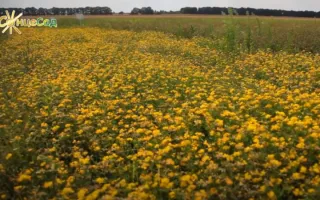
In the face of forage shortages, choosing perennial legumes is a critical factor for livestock profitability. The 'Focus' birdsfoot trefoil variety, developed by the breeders at RosNIISK 'Rossorgo' (V.I. Zhuzhukin, S.I. Gorbunov, M.G. Chabaev), is a solution for farms focused on intensive green mass production. Unlike traditional clover or alfalfa, 'Focus' demonstrates exceptional ecological plasticity, allowing for the efficient use of forage land even on challenging, acidic, or poorly cultivated soils.
Practical Application Scenarios
- Forage Crop Planning: The variety is perfectly suited for seeding as part of grass mixtures. Thanks to its ability to regrow rapidly after mowing, 'Focus' ensures a steady flow of green fodder throughout the entire grazing season.
- Land Reclamation and Soil Stabilization: The crop's high adaptability allows it to be used for greening slopes and erosion-prone areas, turning 'problem' zones into productive pastures.
- High-Protein Hay Production: Despite its primary specialization in green forage, the variety shows excellent nutritional values when mown at the right time, making it a valuable component for hay harvesting.
Field practice shows that farms implementing 'Focus' obtain a turf that is more resistant to trampling. This is critical for operations with pasture-based livestock management. The variety's originators have focused on maintaining productive longevity; with proper agronomic management, the stand retains high density for many years, saving the agronomist from frequent reseeding and additional soil preparation costs.
Crop & resistance
Crop
Specifications
| Designation of Use | |
|---|---|
| Registration year | 2009 |
| Catalog | Catalog → Bird's-foot Trefoil |
| Manufacturer | Rossorgo Research Institute |
| Legal data |
Show · 7
|
| Country | Russia |
Store offers
Prices are updated on loadLoading offers…
Available at: Москорма
Aggregator catalog: prices are collected automatically from store websites, normalized by AI and converted at the current exchange rate. Before ordering, confirm the price and availability on the store's website. This block is not indexed by search engines — the data is loaded after the page opens.
Not yet комментариев. Be the first!
Alternatives
Bird's-foot Trefoil · similar varieties

SOLNYSHKO
ФГБНУ Федеральный Аграрный Научный Центр Северо-востока имени Н.В. Рудницкого
047 1 offer
12.54 €per 1 kg ≈ 646 ₴


See also
Often considered together with this variety




Recently viewed
Products you’ve viewed on this site
Reviews · 0