
Lotus hybrid
hybrids between Lotus berthelotii and Lotus maculatus
Description
Growing requirements
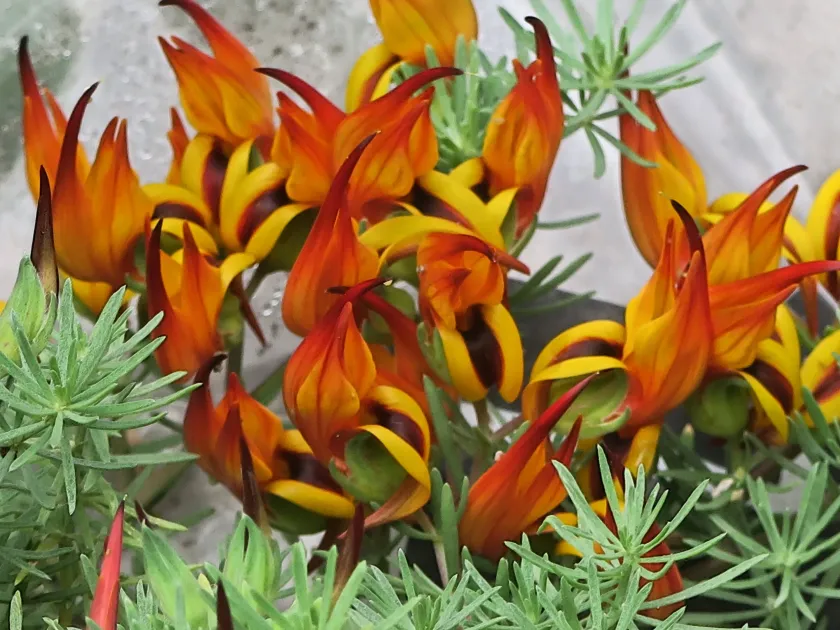
The lotus hybrid, derived from the cross-breeding of Lotus berthelotii and Lotus maculatus, is a trailing perennial belonging to the Fabaceae family. It is widely recognized for its needle-like silver foliage and unique, flame-shaped blossoms.
Native to the Canary Islands, this plant thrives in warm, temperate climates. Due to its exotic origins, it is typically cultivated in containers, allowing for transport to sheltered areas during cold weather seasons.
Successful cultivation requires highly porous, well-draining soil media. The root system is extremely sensitive to waterlogging, necessitating the use of perlite or sand additives to ensure appropriate soil aeration.
The plant demands high light intensity to maintain its compact growth habit and vibrant color. Inadequate light levels lead to etiolated, weak stems and a significant reduction in flowering performance throughout the season.
Regular monitoring of moisture is essential; the soil should be allowed to dry slightly between waterings to prevent the onset of root-related complications typical for this specific hybrid.
Main diseases and pests
Root rot, induced by overwatering and poor drainage, remains the primary threat to the vitality of the lotus hybrid, often leading to rapid decline if not identified early.
Spider mites represent a major pest risk, especially in dry, warm indoor environments or greenhouse settings where humidity levels fall below the recommended range.
Aphids frequently target the growing tips of the trailing stems, potentially transmitting viral diseases and causing the distortion of new leaves and flower buds.
Powdery mildew can affect the foliage during periods of stagnant air and high humidity, appearing as a white, dusty layer that interferes with the plant's photosynthetic capacity.
Integrated pest management, including the use of neem oil and proper airflow, is crucial for maintaining the plant's health and aesthetic value throughout its growing cycle.