
Greater bird's-foot trefoil
Lotus uliginosus Schkuhr
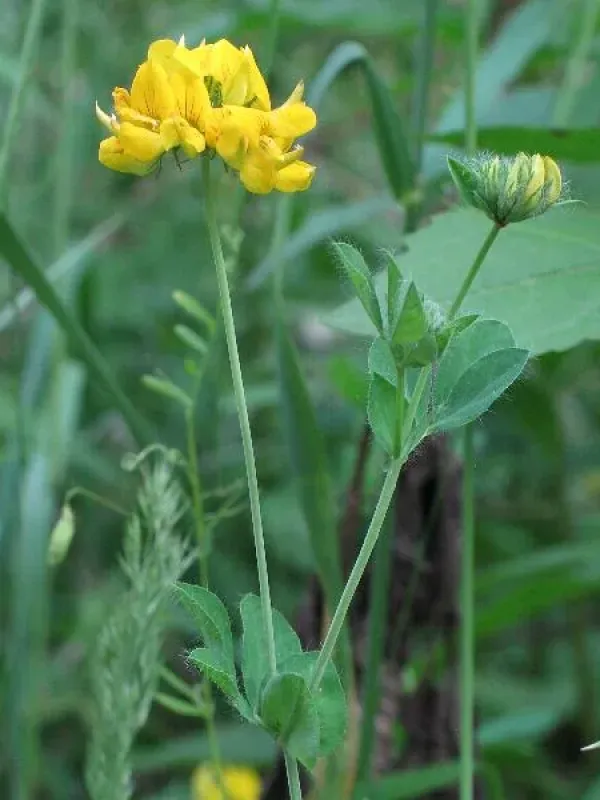
Description
Sowing dates
Lotus uliginosus is a perennial legume typically established through spring sowing, coinciding with the period of high soil moisture.
Because of its very small seeds, shallow planting depth (1-2 cm) is critical to ensure that seedlings have sufficient energy to reach the surface.
The sowing process is most successful when the soil is warm enough to trigger germination but still retains sufficient water from spring rains.
Inoculation with specific Rhizobium bacteria strains is highly recommended to ensure efficient nitrogen fixation and vigorous early growth.
It is often used in oversowing programs for waterlogged pastures where standard forage legumes fail to establish.
Growing requirements
This species is specifically adapted to wet conditions and thrives in habitats that are often too saturated for other forage legumes.
It exhibits excellent tolerance to acidic soil conditions, making it an ideal choice for reclaimed peatlands and heavy clay soils.
The plant requires a temperate climate with consistent rainfall to sustain its high biomass production throughout the growing season.
It is known for its ability to withstand temporary flooding, which would otherwise kill off less hardy forage species.
While hardy, the plant benefits from protection against extremely low temperatures without snow cover, which can cause frost heaving in exposed areas.
Yield
The crop provides high-quality forage that maintains nutritional integrity, making it a valuable component of permanent pasture mixtures.
Average yields of dry matter typically range from 3 to 5 tons per hectare, depending on the management intensity and soil fertility.
Unlike many other legumes, Lotus uliginosus is non-bloating, which makes it safe for grazing ruminants without dietary restrictions.
It demonstrates a strong capacity for regrowth, allowing for multiple hay cuts or intensive grazing cycles during the summer.
Application of phosphorus and potassium-based fertilizers significantly enhances root development and annual biomass output.
Main diseases and pests
The crop is susceptible to various fungal pathogens, including rusts and powdery mildew, particularly in seasons with high humidity and stagnant air.
Root rot diseases can become problematic in areas where drainage is extremely poor, leading to premature thinning of the stand.
Insect pests, such as weevils, often target the flower buds and pods, which can drastically reduce seed yields in commercial plots.
Effective management strategies include maintaining appropriate plant density to ensure sufficient airflow and light penetration within the canopy.
Regular monitoring for early signs of disease and selecting locally adapted cultivars are the best ways to mitigate potential production losses.
Harvesting
Harvesting for high-quality hay should ideally commence at the onset of the flowering phase to capture maximum protein levels.
For green manure or grazing, the plant should be managed to prevent lignification, ensuring high palatability for livestock.
Careful handling during the hay curing process is necessary, as the leaves are delicate and prone to shattering if over-dried.
Seed production harvesting requires precise timing to catch the pods before they dehisce and disperse seeds in the field.
Post-harvest management involves leaving sufficient stubble height to protect the crown and support rapid regrowth for the next cycle.