


SKU #73376
·
58 views
CHEPRASOVSKIY
Bird's-foot Trefoil
User rating
0 votes0% positive reviews
No ratings yet — be the first.
Designation of Use
Pasture
Registration year
2021
About product

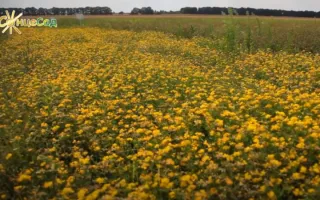
A robust pasture-type birdsfoot trefoil cultivar known for high regrowth capacity and adaptability to various soil conditions.
Designation of Use
Pasture
Registration year
2021
Description
Resilient forage for intensive grazing
The «Cheprasovsky» birdsfoot trefoil (Lotus corniculatus) variety, developed by the V.R. Williams All-Russian Fodder Research Institute, represents a specialized breeding achievement tailored for sustainable pasture management. As an established cultivar in the region, it addresses the need for forage crops capable of thriving in diverse, and often challenging, soil conditions where standard clovers or alfalfa may fail.
Agronomic Profile and Market Position
Primarily classified for grazing, «Cheprasovsky» is engineered to withstand the rigors of animal trampling and intensive clipping. Its biological profile favors rapid regrowth, ensuring a continuous supply of green mass throughout the grazing season. The variety is particularly valued for its adaptability, performing reliably in acidic and moderately moist soils where other legumes exhibit diminished productivity.
Key Benefits for Producers
- High Regrowth Potential: The variety exhibits excellent recovery rates post-grazing, which is crucial for maintaining forage availability throughout the season.
- Durability: Proven track record in long-term pasture systems, offering structural integrity and resistance to biotic stress.
- Nutritional Stability: Maintains high protein content and digestibility, essential for livestock performance.
By leveraging the pedigree of the V.R. Williams Institute, «Cheprasovsky» offers agricultural producers a low-risk, high-reward component for establishing long-term cultural pastures. It serves as a cornerstone for farming systems aiming for consistent forage yields without the need for frequent reseeding, providing a robust solution for diversified grassland management.
Crop & resistance
Crop
Specifications
| Designation of Use | |
|---|---|
| Registration year | 2021 |
| Catalog | Catalog → Bird's-foot Trefoil |
| Legal data |
Show · 1
|
| Country | Russia |
Store offers
Prices are updated on loadLoading offers…
Aggregator catalog: prices are collected automatically from store websites, normalized by AI and converted at the current exchange rate. Before ordering, confirm the price and availability on the store's website. This block is not indexed by search engines — the data is loaded after the page opens.
Not yet комментариев. Be the first!
Alternatives
Bird's-foot Trefoil · similar varieties


See also
Often considered together with this variety




Recently viewed
Products you’ve viewed on this site
Reviews · 0