
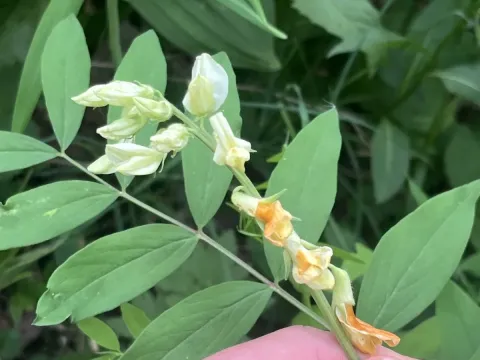
Smooth vetchling
Lathyrus laevigatus
Smooth vetchling (Lathyrus laevigatus) is a perennial legume species highly valued for its contribution to forage production and soil health improvement. Belonging to the Fabaceae family, it thrives in moderate climates, showcasing remarkable hardiness.
What the section contains
Smooth vetchling
The plant originates from forest environments, which dictates its preference for well-structured, moisture-retentive soils. It performs best in neutral to slightly acidic soil conditions with adequate organic matter content to support nitrogen-fixing activity.
In terms of climate requirements, smooth vetchling is well-adapted to temperate regions. It displays high cold tolerance, making it a reliable choice for regions where shorter growing seasons necessitate robust and resilient crop varieties.
Agronomic management focuses on providing adequate spacing to prevent competition and allow for optimal root development. Regular monitoring of nutrient levels, particularly phosphorus, is essential for maximizing biomass production and ensuring high protein content.
Economically, the crop is primarily utilized for hay and silage production. Its ability to serve as a nitrogen-fixing cover crop also makes it an excellent choice for sustainable agricultural systems aiming to reduce reliance on synthetic fertilizers.
Powdery mildew represents the most common fungal challenge for smooth vetchling, particularly in dense stands with poor airflow. Management involves selecting appropriate planting densities and ensuring proper field sanitation practices.
Insect pests, such as weevils, can cause significant damage to early-stage growth. Integrated pest management (IPM) strategies, including biological controls and targeted monitoring, are recommended to maintain crop health throughout the season.
Root rot diseases are more prevalent in poorly drained soils. Farmers must prioritize site selection with excellent drainage properties to prevent the buildup of soil-borne pathogens that thrive in saturated conditions.
Ascochyta blight can affect foliage quality and reduce overall yield. To mitigate this risk, it is important to practice a strict crop rotation cycle, preventing the accumulation of pathogens in the field over consecutive growing seasons.
Modern approaches to protecting this crop involve the use of resilient genotypes and precision agriculture tools. By maintaining optimal soil pH and moisture balance, farmers can significantly improve the crop's natural resistance to environmental stressors.